
Typophorini
Baly, 1865
Genus Guides
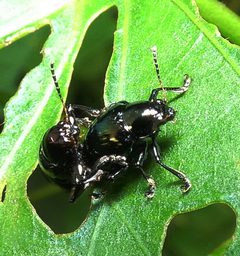
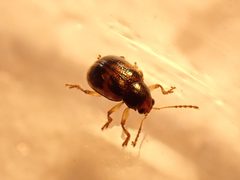
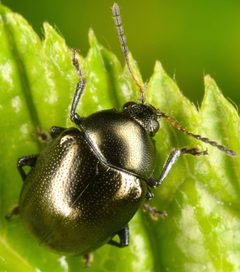
4Typophorini is a tribe of leaf beetles in the Eumolpinae, containing approximately 100 distributed worldwide. Members are primarily characterized by distinctive notches on the tibiae of the middle and hind legs, often referred to as cleaners. The tribe also exhibits a subglabrous body surface and bifid pretarsal claws. Taxonomic organization follows five informal sections: Callisinites, Metachromites, Nodostomites, Pagriites, and Typophorites.
Pronunciation
How to pronounce Typophorini: //taɪˌpɒfəˈraɪnaɪ//
These audio files are automatically generated. While they are not always 100% accurate, they are a good starting point.
Identification
Distinguished from other Eumolpinae tribes by the presence of notches on the middle and hind tibiae, which function as cleaners. Body surface is generally subglabrous (smooth, with reduced ). Pretarsal claws are bifid (split or forked at the tip). These morphological features provide consistent diagnostic characters for tribal assignment.
Images
Distribution
Worldwide distribution across multiple biogeographic regions. Specific distribution records include south India for certain such as Bathseba syzygium.
Diet
Folivory (leaf feeding). Some are known to feed on specific plants: Bathseba syzygium feeds on Syzygium cumini (Myrtaceae); Bathseba bifasciata has been recorded on Mangifera indica and Anacardium occidentale (Anacardiaceae).
Host Associations
- Syzygium cumini - plantMyrtaceae; pest B. syzygium described from this in south India
- Mangifera indica - plantAnacardiaceae; first-time record for B. bifasciata
- Anacardium occidentale - plantAnacardiaceae; first-time record for B. bifasciata
Ecological Role
Herbivore; some achieve pest status on cultivated plants including mango, cashew, and jambolan.
Human Relevance
Agricultural pest status: Bathseba syzygium is reported as a pest of Syzygium cumini in south India. Bathseba bifasciata has been documented as a pest on Mangifera indica (mango) and Anacardium occidentale (cashew).
Similar Taxa
- BromiiniSection Scelodontites was transferred from Bromiini to Typophorini in 2003, indicating historical taxonomic confusion between these tribes
More Details
Taxonomic Organization
are organized into five informal sections: Callisinites, Metachromites, Nodostomites, Pagriites, and Typophorites, with some genera remaining incertae sedis. Notable genera include Pagria, Callisina, Edistus, Iviva, and Vadoniella.
Taxonomic History
Following Seeno and Wilcox (1982), the informal section system was established. The 2003 Catalog of leaf beetles of America North of Mexico transferred Scelodontites from Bromiini to Typophorini, reflecting ongoing refinement of tribal boundaries.