
Colaspis brunnea
(Fabricius, 1798)
grape colaspis
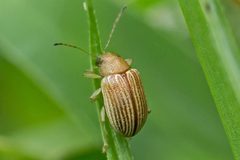
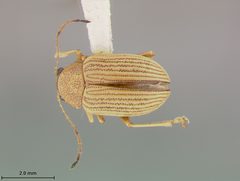
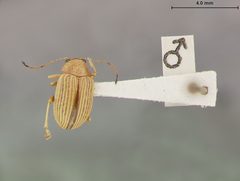
Colaspis brunnea, commonly known as the grape colaspis, is a small leaf beetle native to eastern North America. are brown in color and approximately 5 mm in length, with bearing parallel rows of puncture marks. The is , as larvae in the soil. While it has been observed feeding on crops including corn and soybeans, documented economic damage remains limited.
Pronunciation
How to pronounce Colaspis brunnea: /kɔˈlæs.pɪs ˈbrʌn.iə/
These audio files are automatically generated. While they are not always 100% accurate, they are a good starting point.
Identification
Distinguished from similar Colaspis by the combination of small size (~5 mm), brown coloration, and the distinctive parallel rows of puncture marks on the . The scarabaeiform larval form with orange capsule separates it from larvae of other leaf beetle .
Images
Habitat
Agricultural and natural in eastern North America. Associated with crop fields including corn and soybean plantings, as well as grape vineyards (reflecting its ).
Distribution
Eastern United States, with records extending into Ontario and Québec in Canada. Distribution records also include Vermont.
Seasonality
active during growing season; with single per year. occurs in soil as larvae.
Diet
feed on crop plants including corn (Zea mays), soybeans (Glycine max), and grape. Specific feeding habits of larvae in soil not documented in available sources.
Host Associations
- Zea mays - feedingcorn
- Glycine max - feedingsoybean
- Vitis - feedinggrape, source of
Life Cycle
. Overwinters in soil as larvae. and occur in growing season. Specific timing of -laying and pupation not documented in available sources.
Ecological Role
Herbivore in agricultural . Early-season pest of seed crops in southern U.S. soybean production systems. irruptions may contribute to multi- damage in rangeland contexts, though this species is not a grasshopper.
Human Relevance
Agricultural pest of minor economic significance. Listed among early-season pests controlled by neonicotinoid in southern U.S. soybean production. Damage to corn and soybeans has not been documented as economically significant.
Similar Taxa
- Other Colaspis speciesSimilar size and general leaf beetle ; distinguished by specific elytral punctation pattern and coloration
- Bean leaf beetle (Cerotoma trifurcata)Similar crop pest status and ; distinguished by different coloration patterns and body shape
More Details
Etymology
The specific epithet brunnea derives from Latin for brown, referring to coloration.
Pest Status Context
While included in lists of early-season soybean pests in the southern U.S., C. brunnea is not considered a primary economic pest. Its mention in economic literature largely reflects its presence in efficacy studies rather than documented significant damage.
Sources and further reading
- BugGuide
- Wikipedia
- GBIF taxonomy match
- iNaturalist taxon
- NCBI Taxonomy
- Ever Seen a Mantidfly? | Bug Squad
- Kennicott Grasshopper
- Bruner Slantfaced Grasshopper
- Treating Southern Soybeans with Neonicotinoids Yields Economic Benefits After All
- Bug Eric: Wasp Mantisfly
- When is a stag beetle not a stag beetle? | Beetles In The Bush