
Colaspis
Fabricius, 1801
Species Guides
22- Colaspis arizonensis
- Colaspis brownsvillensis(Brownsville milkvine leaf beetle)
- Colaspis brunnea(grape colaspis)
- Colaspis costipennis
- Colaspis crinicornis
- Colaspis cruriflava
- Colaspis favosa(grape colaspis)
- Colaspis favosa-complex(grape colaspis)
- Colaspis flavocostata
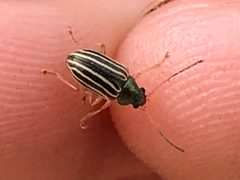
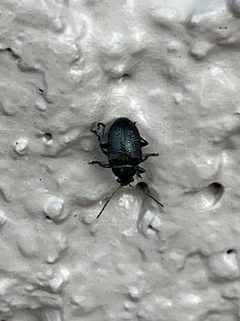
Colaspis is a large of leaf beetles in the Eumolpinae, containing over 200 distributed across North and South America. The genus includes significant agricultural pests, such as the grape colaspis (Colaspis brunnea), which damages crop roots and foliage. Several species have been documented from Eocene fossil deposits in Colorado, USA. Taxonomic history of the genus has been complicated by nomenclatural disputes, particularly regarding the synonymy of Maecolaspis.

Pronunciation
How to pronounce Colaspis: //koʊˈlæspɪs//
These audio files are automatically generated. While they are not always 100% accurate, they are a good starting point.
Identification
Colaspis are Eumolpinae leaf beetles with over 200 described species; precise morphological diagnostic characters for the require examination of specific species descriptions. The genus has been historically confused with Metaxyonycha due to type species designation errors. Several species groups were split into separate genera by Bechyné (Allocolaspis, Callicolaspis, Percolaspis, Nodocolaspis, Zenocolaspis), indicating that Colaspis as currently defined may represent a polyphyletic requiring further subdivision.
Images
Habitat
vary by : some occupy corn and soybean agroecosystems (e.g., C. crinicornis in the Great Plains), while others are associated with grapevine vineyards (e.g., C. caligula in Argentina). Larval stages are soil-dwelling; occur in crop fields during growing seasons.
Distribution
North and South America. Specific records include: United States (Great Plains region, southeastern Nebraska, Vermont, Eocene fossil deposits in Colorado), Argentina (Mendoza region), and Colombia (Antioquia, Caldas, Cundinamarca, Huila, Magdalena, Tolima, Meta, Valle del Cauca departments).
Seasonality
of C. crinicornis have been recorded in crop fields from June through August in southeastern Nebraska, with low densities outside crop . Seasonality for other not documented in available sources.
Diet
Phytophagous; feeding habits vary by and life stage. of C. crinicornis feed on corn (Zea mays) and soybean (Glycine max) leaves; larvae feed on below-ground plant portions including corn roots. C. caligula is associated with Vitis vinifera (grapevine) crops. Some species are and can utilize tissues from different plant .
Host Associations
- Zea mays - and larval feeding; C. crinicornis
- Glycine max - feeding; C. crinicornis and C. brunnea (grape colaspis)
- Vitis vinifera - C. caligula in Argentina
- Triticum aestivum - C. crinicornis
- Trifolium pratense - C. crinicornis
- Medicago sativa - C. crinicornis
Life Cycle
Complete with , larva, pupa, and stages. In C. crinicornis: eggs deposited in soil clusters; larvae and pupae are soil-dwelling; majority of spent in larval stage; occurs as larvae; adults emerge from soil with upward movement . Egg, pupal, and adult stages are relatively short. Eggs are sensitive to desiccation and adhere to each other.
Behavior
of C. crinicornis exhibit upward movement from soil level after , similar to Diabrotica . Females deposit clusters in soil with variously sized clumps rather than compacted smooth soil. Larvae have difficulty moving in loose substrate.
Ecological Role
Agricultural pest in crop production systems, particularly corn, soybean, and grapevine. densities of some have increased in agroecosystems. Early-season pest in southern U.S. soybean production, contributing to pest pressure that influences for applications.
Human Relevance
Several are economically significant crop pests. The grape colaspis (Colaspis brunnea) is a notable pest of soybeans and other crops. Neonicotinoid are widely used to control early-season Colaspis in southern U.S. soybean production, with documented yield benefits in Louisiana, Mississippi, Arkansas, and Tennessee. Four extinct species are known from Eocene deposits in Colorado, contributing to understanding of leaf beetle paleodiversity.
Similar Taxa
- MetaxyonychaHistorically synonymized with Colaspis due to shared type (Chrysomela flavicornis); separated by Brown in 1961
- MaecolaspisJunior synonym of Colaspis; created by Bechyné in 1950 based on erroneous type designation, but still used in some Neotropical publications
- Allocolaspis, Callicolaspis, Percolaspis, Nodocolaspis, Zenocolaspis split from Colaspis by Bechyné; some previously placed in Colaspis now assigned to these
More Details
Taxonomic Complexity
The has a complicated taxonomic history involving disputes between Jan Bechyné, who created the synonym Maecolaspis and split several new genera, and Doris Holmes Blake, who continued to use Colaspis. This created dual nomenclatural systems that have confused Neotropical Eumolpinae studies. The genus requires further subdivision.
Fossil Record
Four extinct are known from Eocene deposits in Colorado, USA: C. aetatis, C. diluvialis, C. luti, and C. proserpina.
Sources and further reading
- BugGuide
- Wikipedia
- GBIF taxonomy match
- iNaturalist taxon
- NCBI Taxonomy
- Catalogue of Life
- Treating Southern Soybeans with Neonicotinoids Yields Economic Benefits After All
- The biology and morphology of Colaspis flavida (Say)
- Colaspis caligula, a new species found in association with Vitis vinifera (L.) crops in Argentina (Coleoptera: Chrysomelidae)
- Developmental Biology and Effects of Adult Diet on Consumption, Longevity, and Fecundity of Colaspis crinicornis (Coleoptera: Chrysomelidae)