
Xanthonia decemnotata
(Say, 1824)
ten-spotted leaf beetle
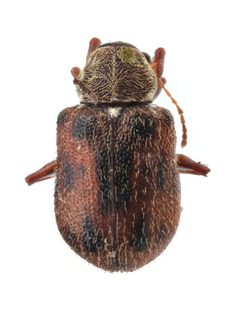
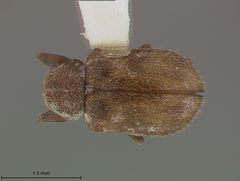
Xanthonia decemnotata is a small leaf beetle in the Chrysomelidae, commonly known as the ten-spotted leaf beetle. It is native to eastern North America, with a range extending from the Canadian prairies to the northeastern United States. The is characterized by its reddish-brown marked with ten black spots. It is one of several species in the Xanthonia, which are generally associated with leaf-feeding habits on various plants.

Pronunciation
How to pronounce Xanthonia decemnotata: //zænˈθoʊniə ˌdɛsɛmnoʊˈteɪtə//
These audio files are automatically generated. While they are not always 100% accurate, they are a good starting point.
Identification
The combination of small size (3–3.5 mm), reddish-brown with ten black spots, and eastern North American distribution distinguishes this . The specific epithet 'decemnotata' (Latin for 'ten-marked') refers to the spot pattern. Similar Xanthonia species may differ in spot number, coloration, or geographic range, but specific diagnostic characters require examination.
Images
Appearance
measure 3–3.5 mm in length. The are reddish-brown in ground color and bear ten distinct black spots. The overall body form is compact and typical of small leaf beetles.
Habitat
Specific associations are not well documented. Based on -level patterns and distribution, it likely occurs in deciduous forest and woodland edge habitats where plants are present.
Distribution
Eastern North America: from Saskatchewan to Nova Scotia in Canada, and south to New England in the United States. Records become increasingly rare southward.
More Details
Taxonomic note
Originally described as Colaspis decemnotata by Thomas Say in 1824, later transferred to Xanthonia. The genus Xanthonia belongs to Eumolpinae within Chrysomelidae.
Observation frequency
As of available records, the has relatively few documented observations (133 records on iNaturalist), suggesting it may be genuinely uncommon or under-recorded due to its small size.