Neohaemonia melsheimeri
(Lacordaire, 1845)
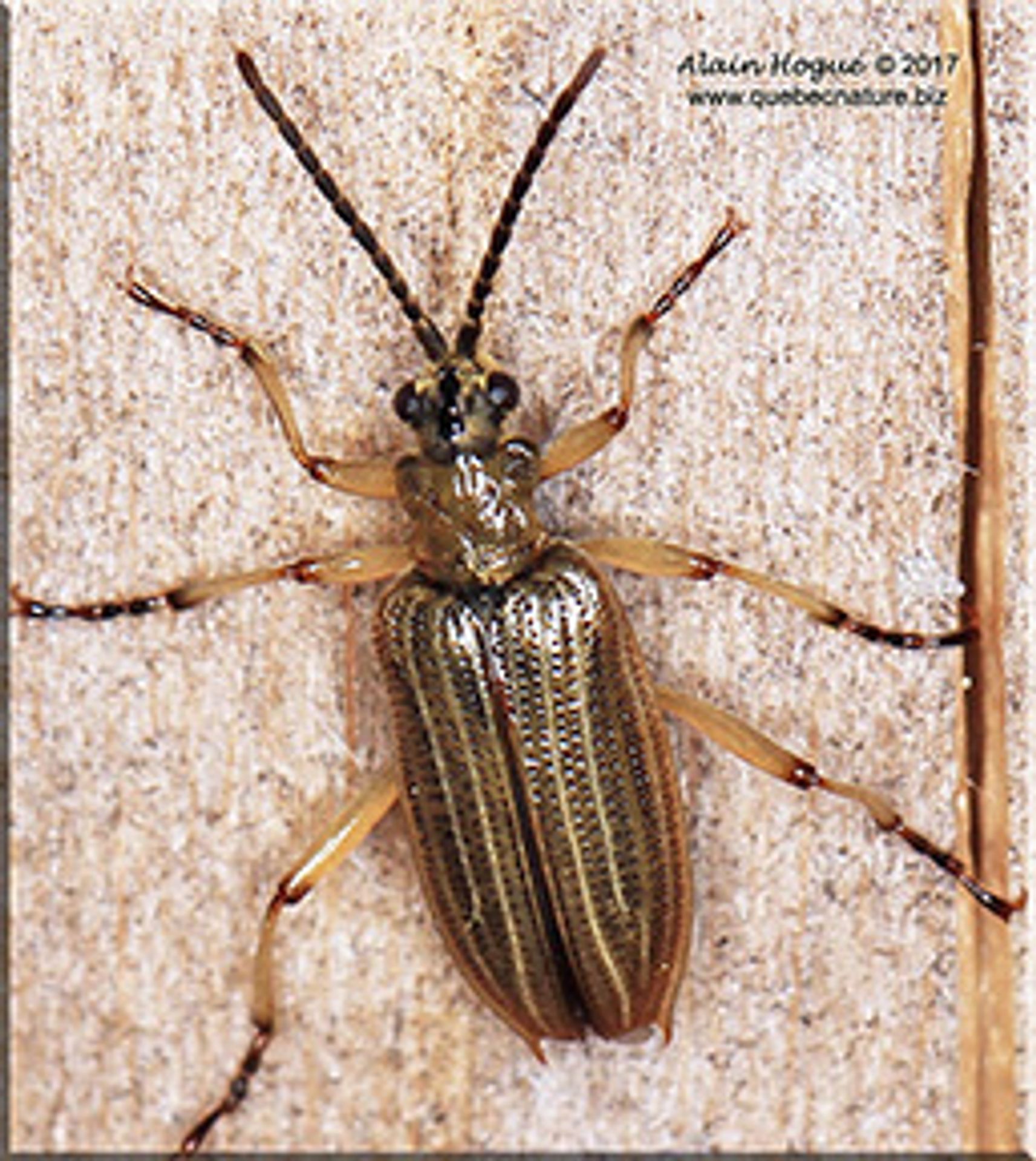
Neohaemonia melsheimeri is an aquatic leaf beetle in the Donaciinae, specialized for life in freshwater environments. The occurs across North America with confirmed records from Canada. Like other Donaciinae, it is associated with aquatic vegetation and has larvae that develop underwater using specialized respiratory structures.
Pronunciation
How to pronounce Neohaemonia melsheimeri: //ˌniːoʊˌhaɪˈmoʊniə ˌmɛlˈʃaɪməri//
These audio files are automatically generated. While they are not always 100% accurate, they are a good starting point.
Identification
Members of Neohaemonia can be distinguished from related Donaciinae by features of the prosternal process and elytral . Specific identification of N. melsheimeri requires examination of male genitalia and comparison with N. nigricornis and N. flagellata. are elongate beetles with thread-like typical of the .
Images
Habitat
Freshwater aquatic environments including ponds, lakes, and slow-moving streams. Associated with submerged and emergent aquatic vegetation.
Distribution
North America. Confirmed records from Canadian provinces: Manitoba, New Brunswick, and Ontario. The full extent of its U.S. range is not well documented.
Life Cycle
Larvae develop underwater and possess a specialized respiratory siphon for obtaining air from plant tissues. This trait is characteristic of Donaciinae but specific details for N. melsheimeri are not documented.
Similar Taxa
- Neohaemonia nigricornisCo-occurring distinguished by antennal coloration and male genitalia structure
- Neohaemonia flagellataCo-occurring requiring dissection for reliable separation
- Donacia speciesRelated aquatic leaf beetles in same tribe; Donacia typically have broader bodies and different prosternal process
More Details
Taxonomic Note
The Neohaemonia was established to accommodate previously placed in Haemonia. The authority is sometimes cited as Lacordaire, 1845, though the original combination was in Haemonia.
Research Status
This is poorly studied with minimal published biological information beyond basic collection records. Most details are inferred from better-known and characteristics.