
Donacia edentata
Schaeffer, 1919
Toothless pond lily leaf beetle
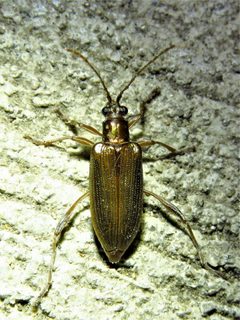
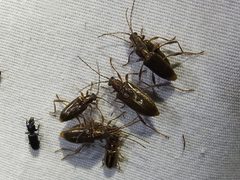
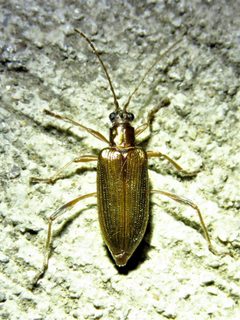
Donacia edentata is an aquatic leaf beetle in the Chrysomelidae, described by Schaeffer in 1919. The "toothless pond lily leaf beetle" refers to its edentate (toothless) condition and association with aquatic plants in the Nymphaeaceae family. Like other members of Donacia, it is adapted to life in freshwater with submerged vegetation.
Pronunciation
How to pronounce Donacia edentata: //dɔːˈneɪʃə iːdɛnˈtɑːtə//
These audio files are automatically generated. While they are not always 100% accurate, they are a good starting point.
Identification
The specific epithet "edentata" (toothless) distinguishes this from that possess teeth on certain structures. Identification to species level requires examination of mouthpart , particularly the , and comparison with other Donacia species. Members of Donacia can be recognized by their elongate, somewhat parallel-sided body form, metallic coloration, and enlarged hind adapted for swimming.
Images
Habitat
Freshwater aquatic with submerged vegetation, particularly those supporting water lilies and related plants (Nymphaeaceae).
Distribution
North America.
Host Associations
- Nymphaeaceae - plantInferred from -level association; Donacia are typically monophagous or oligophagous on aquatic plants
Similar Taxa
- Other Donacia speciesDonacia contains numerous similar-looking aquatic leaf beetles; D. edentata is distinguished by its toothless mandibular condition
More Details
Etymology
The specific epithet "edentata" derives from Latin "e-" (without) + "dentata" (toothed), referring to the reduced or absent teeth on the or other structures compared to related .
Taxonomic history
Described by Schaeffer in 1919, this has remained relatively obscure in the literature with limited subsequent study.