
Pachybrachis dubiosus
J.L.LeConte, 1880
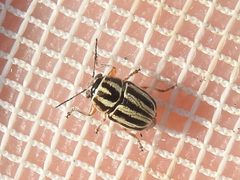
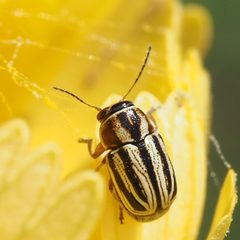
Pachybrachis dubiosus is a of case-bearing leaf beetle in the Chrysomelidae. It was described by J.L. LeConte in 1880. The species belongs to a characterized by small, rounded leaf beetles that often carry or debris on their bodies. Records indicate presence in North America, with observations documented in the southwestern United States.
Pronunciation
How to pronounce Pachybrachis dubiosus: /ˌpækɪˈbreɪkɪs djuˈbaɪəsəs/
These audio files are automatically generated. While they are not always 100% accurate, they are a good starting point.
Identification
As a member of the Pachybrachis, this likely exhibits the typical rounded, convex body shape and small size (generally 2–4 mm) characteristic of the group. Species-level identification within Pachybrachis requires examination of male genitalia and detailed color pattern analysis; external alone is often insufficient for reliable determination. The specific epithet "dubiosus" suggests historical taxonomic uncertainty surrounding this species.
Images
Distribution
North America. Documented observations span the southwestern United States including Arizona and New Mexico. The has been recorded in oak-juniper woodland in southeastern Arizona.
Seasonality
activity has been observed in late July in southeastern Arizona, suggesting summer . The specific remains poorly documented.
Similar Taxa
- Other Pachybrachis speciesConvergent body plan and coloration patterns make visual discrimination unreliable; genital dissection and microsculpture examination typically required for definitive identification.
More Details
Taxonomic history
The specific epithet "dubiosus" (Latin for "doubtful") reflects the historical difficulty in distinguishing this from , a common challenge in the speciose Pachybrachis which contains over 100 North American species.
Collection notes
Specimens have been collected at mercury-vapor and ultraviolet light stations in mesquite-acacia scrub and oak-juniper woodland, indicating activity and attraction to artificial light sources.