
Megalostomis dimidiata
Lacordaire, 1848
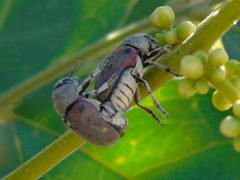
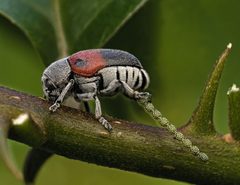
Megalostomis dimidiata is a case-bearing leaf beetle in the Chrysomelidae, Cryptocephalinae. The was described by Lacordaire in 1848 and has undergone extensive taxonomic revision, with seven former or related species now synonymized under this name. It occurs in Central and North America. As a member of the Clytrini tribe, it likely exhibits the case-bearing larval characteristic of this group, though specific details for this species remain poorly documented in accessible literature.
Pronunciation
How to pronounce Megalostomis dimidiata: /mɛɡəˈlɒstəmɪs dɪˌmɪdɪˈɑːtə/
These audio files are automatically generated. While they are not always 100% accurate, they are a good starting point.
Identification
Megalostomis dimidiata can be distinguished from other Megalostomis using the diagnostic features provided in the taxonomic revision by Flowers (2013), which includes a key to all 42 valid species in the . The species has been historically confused with multiple now synonymized under its name, including forms previously described as M. tomentosa and M. punctatissima. Accurate identification requires examination of external and reference to the original descriptions and photographs in the revision.
Images
Distribution
Central America and North America. Specific distribution records are mapped in Flowers (2013), with the occurring from the southwestern United States through Mexico and Central America.
Similar Taxa
- Other Megalostomis speciesThe contains 42 valid that share similar and coloration patterns; precise identification requires use of the diagnostic key in Flowers (2013).
- Megalostomis tomentosa (synonymized)Formerly treated as a separate or , now synonymized under M. dimidiata based on morphological examination.
More Details
Taxonomic History
This has a complex taxonomic history with numerous synonymies proposed in the 2013 revision by Flowers. A lectotype was designated for M. dimidiata Lacordaire, 1848 to stabilize . The former M. dimidiata nayaritensis and M. dimidiata sonorensis are now treated as synonyms rather than distinct subspecies.
Data Gaps
Specific information on plants, associations, and natural enemies for M. dimidiata is mentioned as being included in the checklist of Flowers (2013), but these details were not accessible in the abstract or summary sources provided. Full examination of the revision would be necessary to populate these fields.