
Megalostomis
Chevrolat, 1836
Species Guides
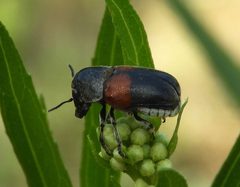
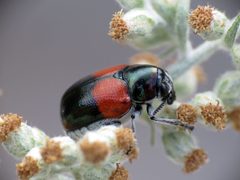
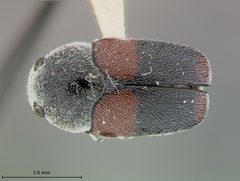
3Megalostomis is a of case-bearing leaf beetles in the Chrysomelidae, Cryptocephalinae. The genus contains 42 valid following a 2013 taxonomic revision, with most species distributed in the Americas. Members of this genus are notable for their associations and case-bearing larval . The genus is divided into seven subgenera, including the arid-adapted subgenus Scaphigenia found in South America.
Pronunciation
How to pronounce Megalostomis: //ˌmɛɡəloʊˈstɒmɪs//
These audio files are automatically generated. While they are not always 100% accurate, they are a good starting point.
Identification
Megalostomis can be distinguished from other Clytrini by their robust body form and characteristic color patterns, often with metallic or contrasting markings. The is characterized by specific male and female genitalia structures, including distinctive internal sac of the . -level identification requires examination of genitalic characters and external morphology; a comprehensive key to all 42 species is available in the 2013 revision.
Images
Distribution
The is distributed primarily in the Americas, with ranging from the southwestern United States through Mexico, Central America, and South America. The subgenus Scaphigenia is restricted to arid regions of South America. Distribution maps for individual species were provided in the 2013 taxonomic revision.
Host Associations
- Host plants - larval food sourceSpecific plant associations are documented in checklists but vary among the 42 species
- Ants - mutualistic associationLarvae are case-bearing and have documented associations with ants, a characteristic feature of the subtribe Megalostomina
Life Cycle
Larvae are case-bearing, constructing portable cases from fecal material and plant debris. This case-bearing habit is characteristic of the Cryptocephalinae and serves as protection during development.
Ecological Role
As herbivorous beetles, and larvae contribute to plant material cycling. The -associated larvae may participate in ecological networks involving ant protection and potential resource exchange.
Similar Taxa
- ThemesiaRelated in the same subtribe Megalostomina; distinguished by morphological characters and genitalia structure
- Other Clytrini generaMegalostomis is distinguished within the tribe Clytrini by its subtribe placement (Megalostomina) and specific genitalic , particularly the internal sac structure of the male
More Details
Taxonomic history
The was established by Chevrolat in 1836. A major revision in 2013 by García-Robledo reduced numerous synonyms and established the current classification with 42 valid , two new species, and 34 new synonymies.
Subgeneric classification
The contains seven subgenera: Megalostomis (sensu stricto), Scaphigenia, Heterostomis, and four others. The subgenus Scaphigenia has been subject to separate phylogenetic analysis due to its distinct arid specialization in South America.
Sources and further reading
- BugGuide
- Wikipedia
- GBIF taxonomy match
- iNaturalist taxon
- NCBI Taxonomy
- Catalogue of Life
- A taxonomic review of the genus Megalostomis Chevrolat (Coleoptera, Cryptocephalinae, Chrysomelidae)
- Taxonomic revision and preliminary phylogenetic analysis of the subgenus Megalostomis (Scaphigenia) Lacordaire (Coleoptera: Chrysomelidae)