Leptinotarsa texana
Schaeffer, 1906
Texas potato beetle
Leptinotarsa texana, commonly known as the Texas potato , is a leaf beetle in the Chrysomelidae. It has been investigated as a potential agent for the weed silverleaf nightshade (Solanum elaeagnifolium). The has been documented as a for the Edovum puttleri, which has been studied for biological control of the related . Its host range includes multiple Solanum species, with field studies showing feeding on silverleaf nightshade and eggplant but not on potato.
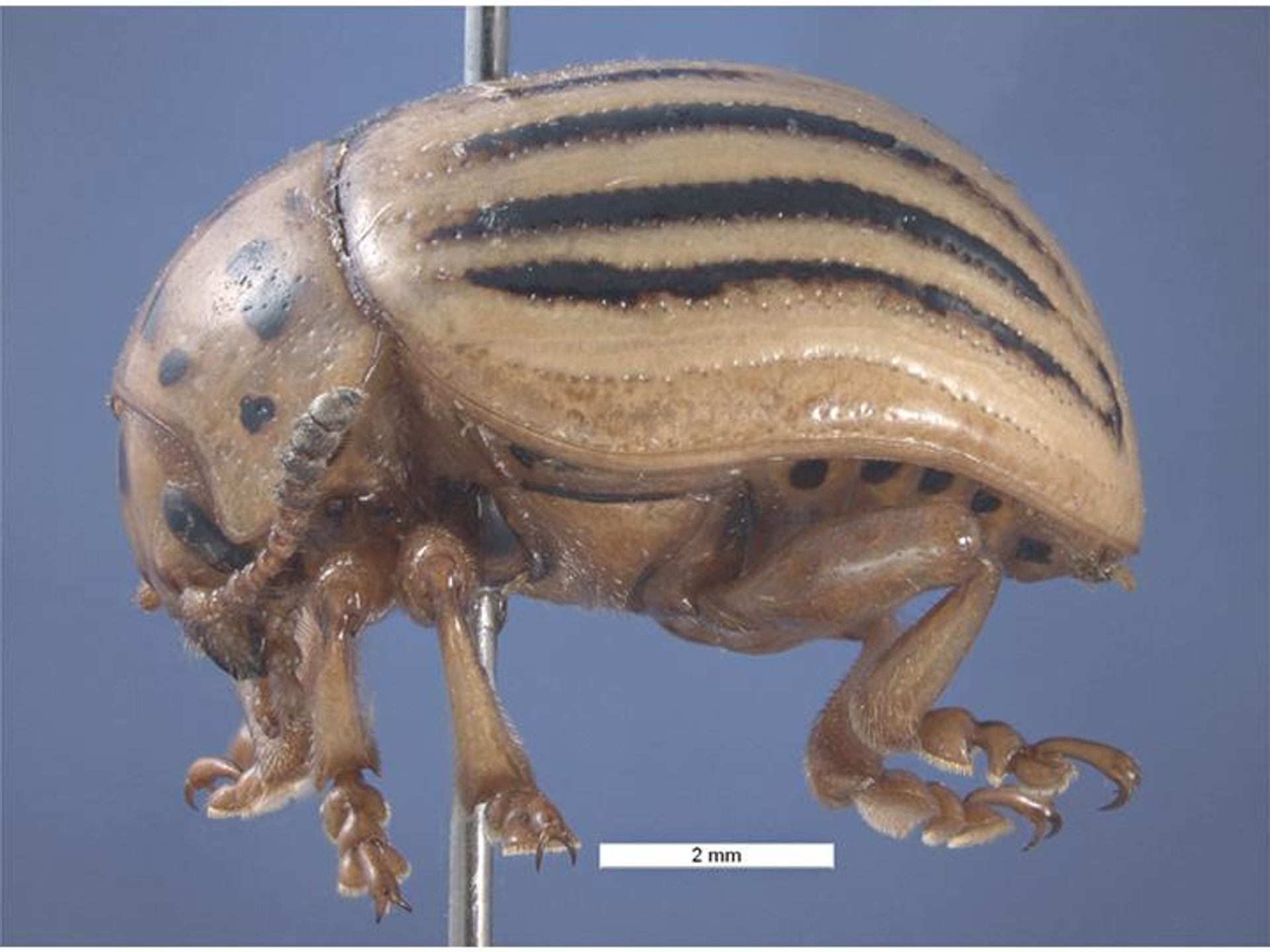
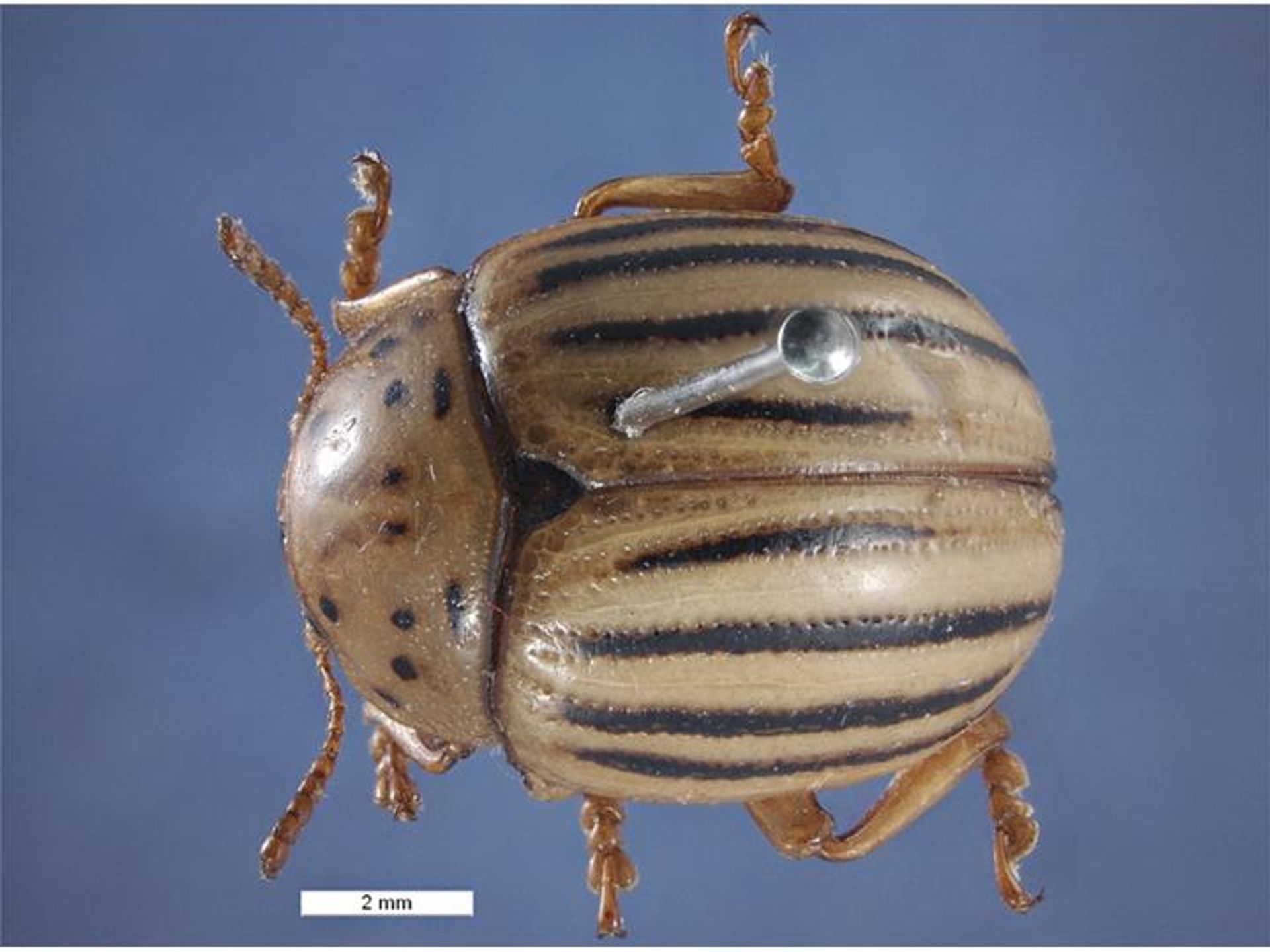
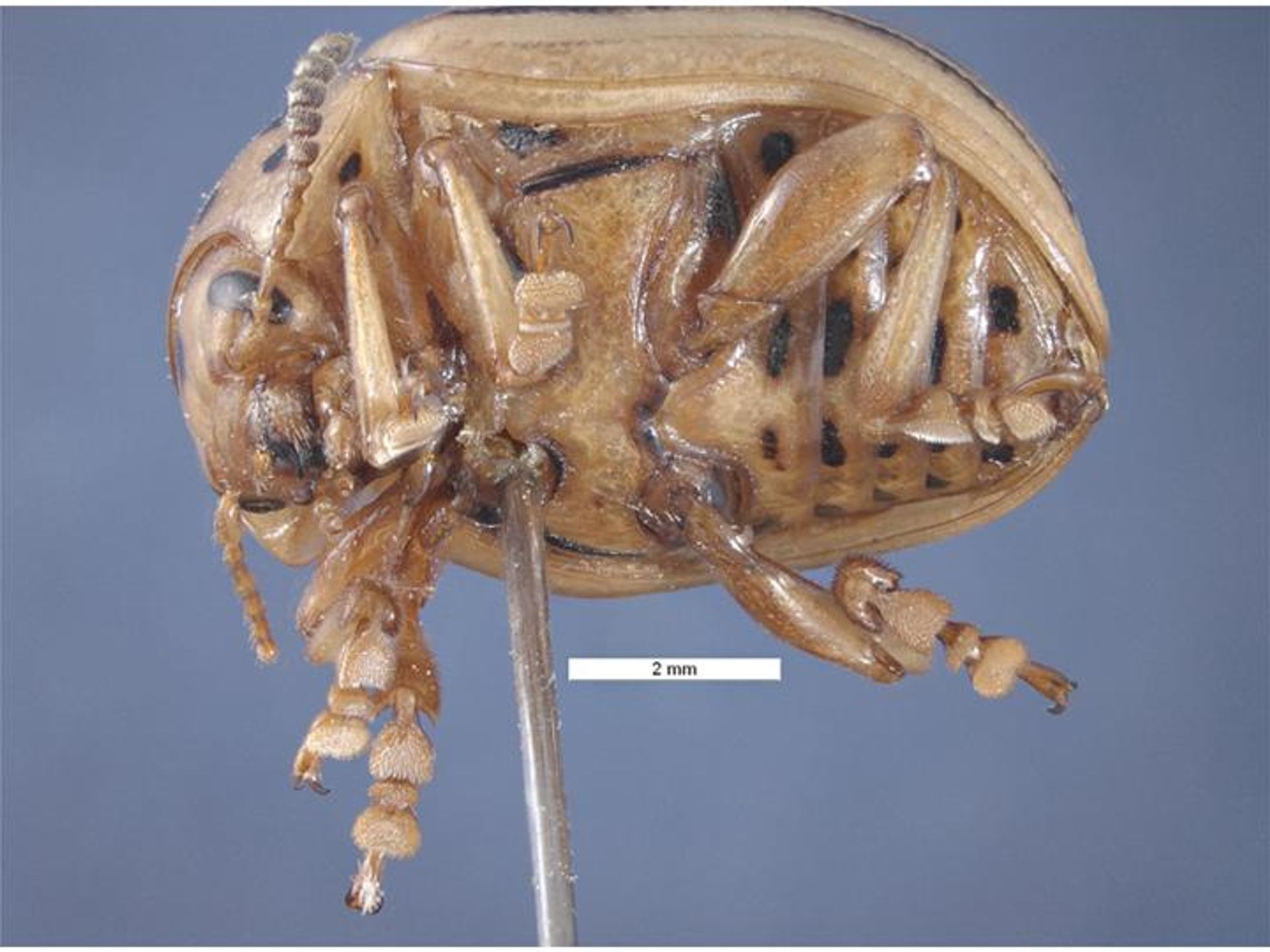
Pronunciation
How to pronounce Leptinotarsa texana: //ˌlɛptɪnoʊˈtɑːrsə tɛkˈseɪnə//
These audio files are automatically generated. While they are not always 100% accurate, they are a good starting point.
Identification
Distinguished from the closely related () by its native range and associations. The two are similar in general body plan and coloration, both showing orange and black patterning typical of the . Specific diagnostic characters for field identification are not documented in the available sources.
Images
Habitat
Associated with Solanaceae plants, particularly silverleaf nightshade in field studies. details specific to this beyond host plant associations are not documented.
Distribution
Recorded from Africa, Central America, and North America according to distribution data. Native to the southern United States and Mexico based on literature focusing on its origin for potential export as a biocontrol agent.
Diet
Feeds on Solanaceae, with documented feeding on silverleaf nightshade (Solanum elaeagnifolium) and eggplant (Solanum melongena) in field trials. No feeding damage observed on potato (Solanum tuberosum) in field studies, though laboratory no-choice conditions may differ.
Host Associations
- Solanum elaeagnifolium - food plantprimary in studies
- Solanum melongena - food plantcauses similar leaf damage to silverleaf nightshade in field trials
- Edovum puttleri - eulophid that parasitizes
Ecological Role
Investigated as a potential agent for silverleaf nightshade. Serves as for , supporting parasitoid that may also attack related pest .
Human Relevance
Studied for potential use in of silverleaf nightshade, a serious agricultural weed worldwide. Considered less suitable than alternative agents due to broader range including eggplant, posing biosecurity risks for release outside native range.
Similar Taxa
- Leptinotarsa decemlineatacongeneric with similar appearance; distinguished by range and geographic distribution, with L. decemlineata being a major potato pest while L. texana does not feed on potato in field conditions
- Leptinotarsa defectacongeneric also evaluated for potential; both species tested on Solanum species in Florida plant evaluations
Sources and further reading
- BugGuide
- Wikipedia
- GBIF taxonomy match
- iNaturalist taxon
- NCBI Taxonomy
- Grasshoppers of Colorado
- Grasshoppers of Colorado
- Bugs in orange and black, predator and prey: Two-spotted stink bug, Perillus bioculatus, and Colorado potato beetle, Leptinotarsa decemlineata — Bug of the Week
- Bugs in orange and black, Part 3 – Trick or treat? Two-spotted stink bug, Perillus bioculatus, has a lethal trick that turns Colorado potato beetle, Leptinotarsa decemlineata, into a tasty treat — Bug of the Week
- How Derivatives of Plant Hormones Could Control Colorado Potato Beetles
- IPM Strategies to Fight the Colorado Potato Beetle
- Predicting the realised host-range of Leptinotarsa texana with open-field experiments
- Assessing the fundamental host-range of Leptinotarsa texana Schaeffer as an essential precursor to biological control risk analysis
- Oviposition behavior of Edovum puttleri, reared on two hosts, Leptinotarsa decemlineata and L. texana
- EVALUATION OF EXOTIC SOLANUM SPP. (SOLANALES: SOLANACEAE) IN FLORIDA AS HOST PLANTS FOR THE LEAF BEETLES LEPTINOTARSA DEFECTA AND L. TEXANA (Coleoptera: Chrysomelidae)
- Leptinotarsa texana Schaeffer and Gargaphia arizonica Drake & Carvalho as potential biocontrol agents for the noxious weed S olanum elaeagnifolium Cav