
Microrhopala rileyi
S. Clark, 1983
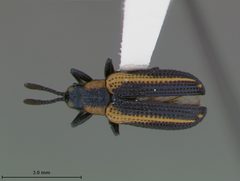
Microrhopala rileyi is a small leaf beetle in the Chrysomelidae, Cassidinae. measure 4.1–5.5 mm (males) and 5.2–5.8 mm (females). The exhibits sexual size dimorphism with females being larger. It is known from five U.S. states in the south-central region.
Pronunciation
How to pronounce Microrhopala rileyi: /ˌmaɪkroʊˈroʊpələ ˈraɪliˌaɪ/
These audio files are automatically generated. While they are not always 100% accurate, they are a good starting point.
Identification
Distinguished from other Microrhopala by combination of black body with metallic blue sheen and orange elytral vittae. M. vittata has dull reddish elytral stripes rather than orange. Eight-segmented and smooth (non-serrate) elytral margins are generic characters. Accurate identification may require reference to Clark's 1983 revision of the .
Images
Appearance
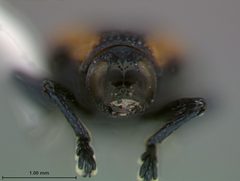
are black, often with a metallic blue sheen. The bear orange vittae (longitudinal stripes). Males measure 4.1–5.5 mm in length; females are larger at 5.2–5.8 mm.
Distribution
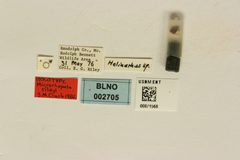
United States: Arkansas, Illinois, Kentucky, Missouri, and Oklahoma. Records suggest a south-central U.S. distribution.
Diet
have been recorded feeding on Helianthus (sunflowers).
Host Associations
- Helianthus - food plant feeding recorded
Similar Taxa
- Microrhopala vittataSimilar size and striped pattern, but M. vittata has dull reddish elytral stripes rather than orange vittae, and specializes on Solidago and Euthamia rather than Helianthus
More Details
Etymology
The specific epithet 'rileyi' honors someone with the surname Riley (likely Edward Riley, a noted coleopterist). Names ending in '-i' indicate dedication to a man.
Taxonomic history
Originally described by S. Clark in 1983. The Microrhopala was formerly placed in Hispinae, but this group has been subsumed into Cassidinae.
Sources and further reading
- BugGuide
- Wikipedia
- GBIF taxonomy match
- iNaturalist taxon
- Catalogue of Life
- Chrysomelidae | Beetles In The Bush | Page 5
- It’s a Mayfly…It’s a Moth…It’s Thyridopteryx | Beetles In The Bush
- Bug Eric: Wasp Wednesday: Neorileya
- The Coleopterists Bulletin | Beetles In The Bush
- Curious Scientific Names Can Make Insects Famous