Microctenochira bonvouloiri
(Boheman, 1855)
Alamo Vine Tortoise Beetle
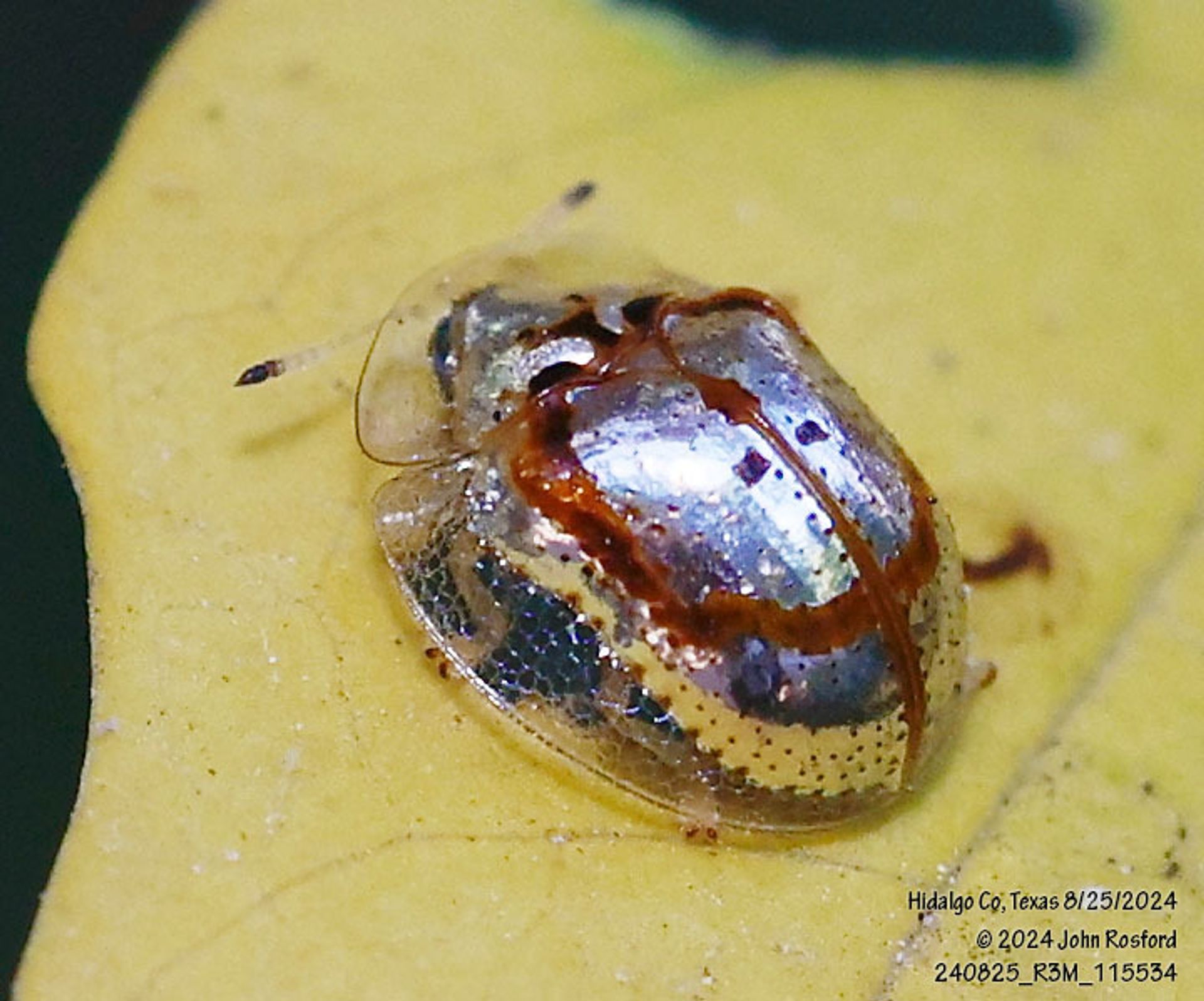
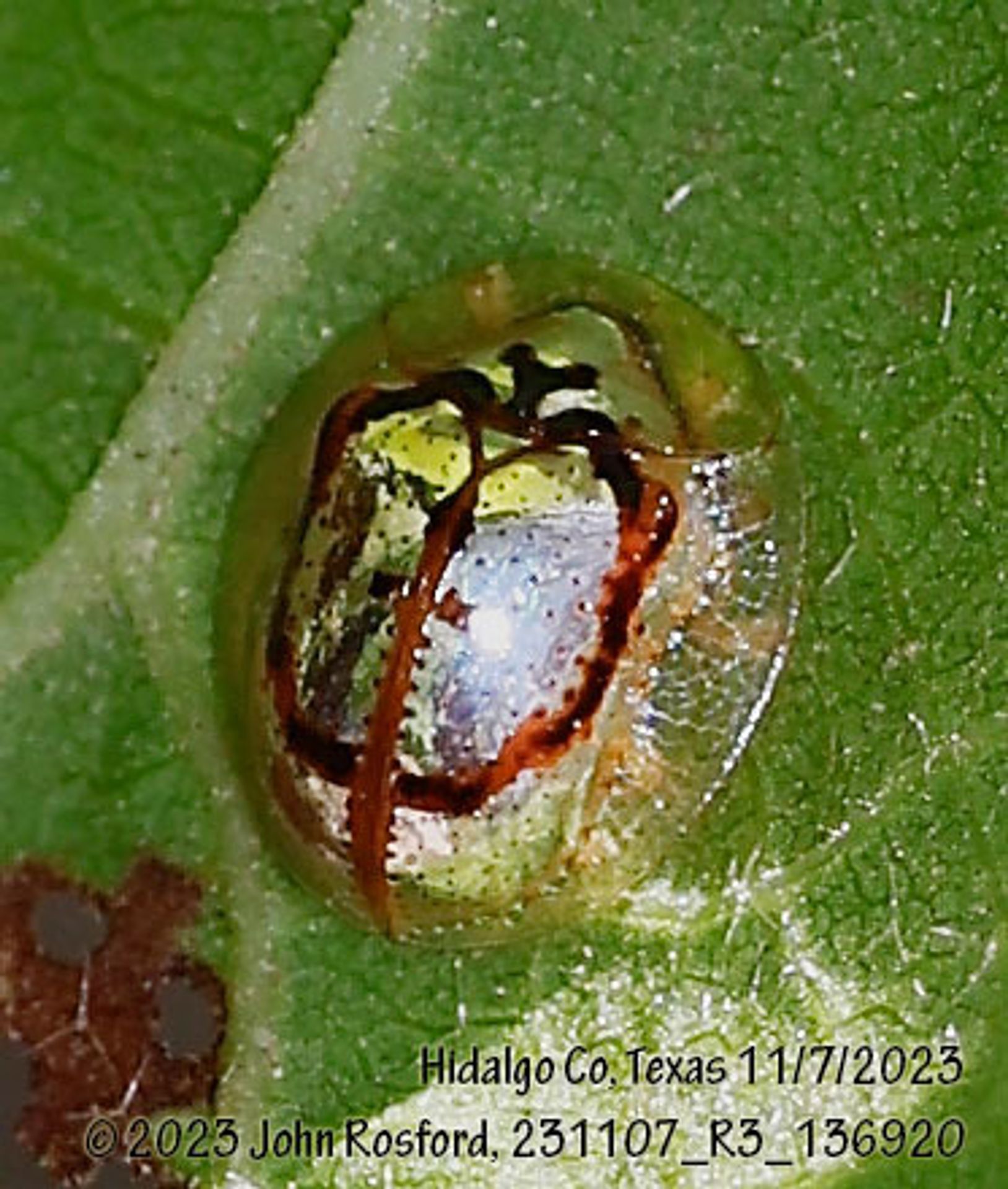
Microctenochira bonvouloiri is a tortoise beetle in the Chrysomelidae, commonly known as the Alamo Vine Tortoise Beetle. The has a translucent with an opaque metallic gold pattern, through which the is visible. It has been photographed on morning glory plants (Ipomoea) in Rica. The Microctenochira is part of the tribe Cassidini, whose members exhibit characteristic tortoise beetle including a domed carapace formed from modified and pronotum.
Pronunciation
How to pronounce Microctenochira bonvouloiri: /ˌmaɪkroʊˌktɛnəˈkaɪrə boʊnvʊˈlwɑri/
These audio files are automatically generated. While they are not always 100% accurate, they are a good starting point.
Identification
The combination of a translucent with opaque metallic gold patterning distinguishes this from tortoise beetles with solid or differently patterned carapaces. The visible through the transparent carapace is a notable feature. The mouthpart position differs from most beetles and may aid in identification. Specific separation from other Microctenochira species requires examination of subtle morphological characters not detailed in available sources.
Images
Appearance
possess a domed, translucent with an opaque metallic gold pattern. The is visible through the transparent portions of the carapace. The mouthparts are located ventrally (on the underside of the head) rather than anteriorly. The overall body form resembles a small turtle, with the carapace formed by the fusion and modification of the and pronotum.
Habitat
Associated with morning glory plants ( Ipomoea) based on photographic records from Rica. As a member of Cassidini, likely inhabits areas where plants in the Convolvulaceae occur.
Distribution
Recorded from Central America and North America. Specific documented localities include Rica. Distribution records indicate presence in Middle America and North America broadly.
Diet
Feeds on morning glory plants ( Ipomoea) based on direct observation. As a tortoise beetle in Cassidini, diet specialization on Convolvulaceae is consistent with tribal characteristics, though specific range for this is not fully documented.
Host Associations
- Ipomoea - plantObserved on morning glory plants in Rica
Life Cycle
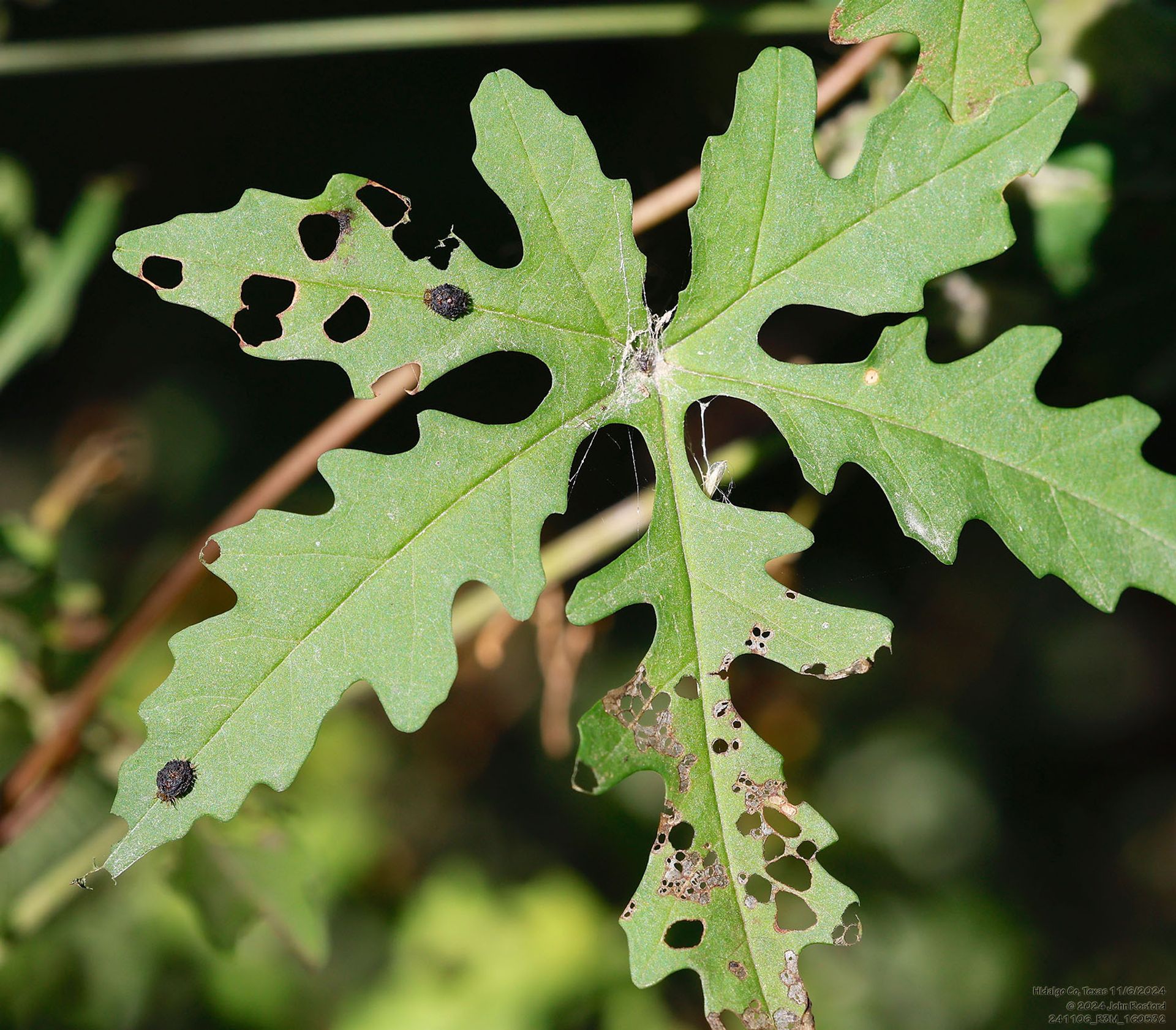
Larval stages and details specific to this are not documented. Related Microctenochira species produce larvae that construct protective structures from and , but whether M. bonvouloiri exhibits this is unconfirmed.
Ecological Role
As a leaf-feeding beetle, contributes to herbivory on Ipomoea . Potential role in nutrient cycling and as prey for , though specific ecological interactions are undocumented.
Human Relevance
references association with Alamo vine (Ipomoea ). No documented economic importance or pest status. Of interest to entomologists studying tortoise beetle diversity and translucent evolution.
Similar Taxa
- Other Microctenochira speciesShare translucent or patterned characteristics; require detailed morphological examination for separation
- Plagiometriona clavata (clavate tortoise beetle)Also possesses translucent with opaque internal pattern, but occurs in eastern and southern United States and has distinct gingerbread-man-like pattern
- Eurypepla calochroma (Geiger tortoise beetle)Has color-changing capability from silvery-greenish to brownish; occurs in Florida
More Details
Photographic documentation
The has been documented in Rica by photographer K. Nishida, with images showing the characteristic translucent with metallic gold pattern on Ipomoea plants.
Taxonomic history
Originally described by Boheman in 1855. Currently accepted as valid in Microctenochira, tribe Cassidini.