Cassida viridis
Linnaeus, 1758
green tortoise beetle
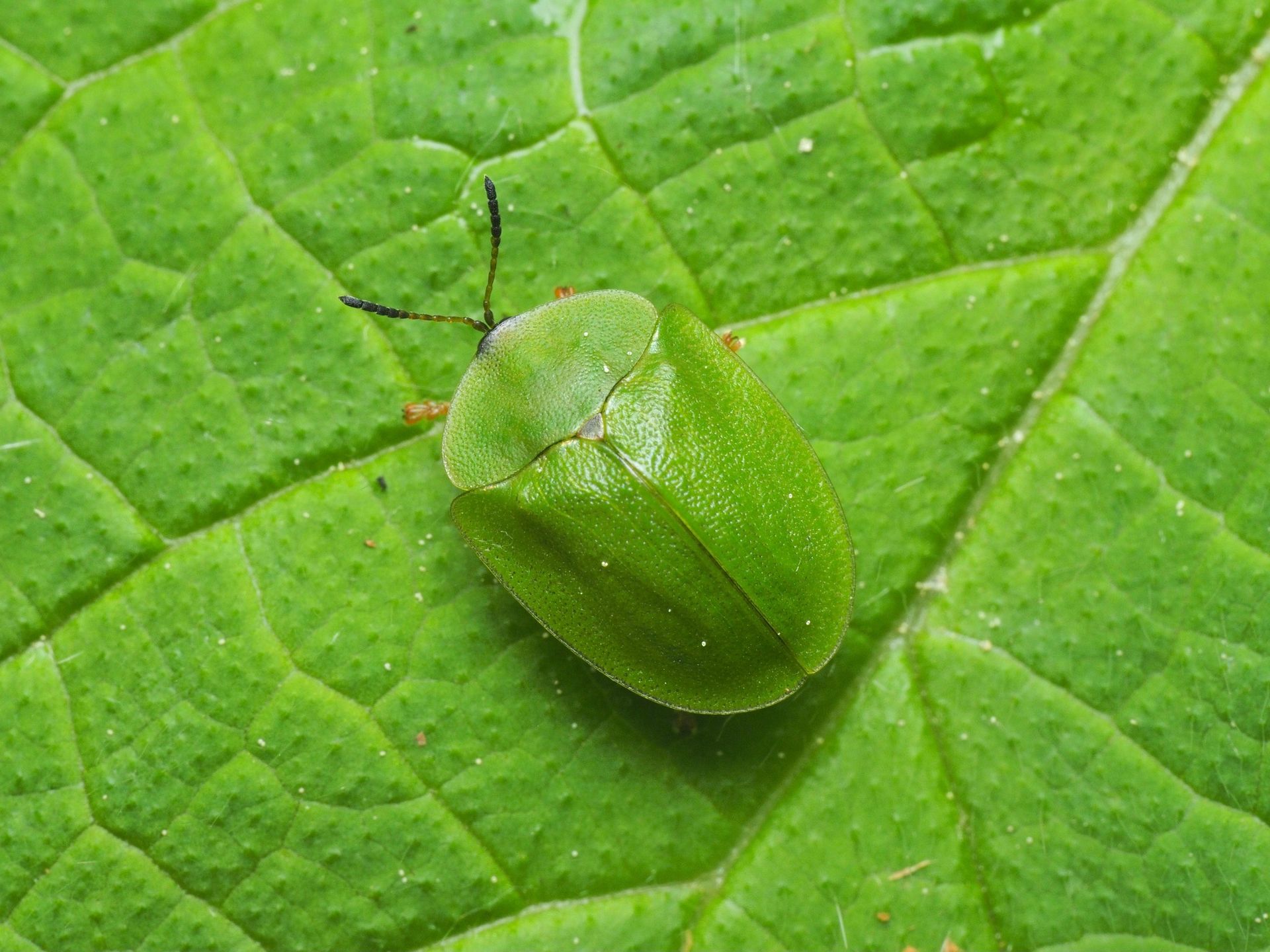
Cassida viridis is a leaf beetle in the Chrysomelidae, commonly known as the green . are distinguished by their uniformly green, flattened oval body without the markings present in other Cassida . The species is strongly associated with mints and other Lamiaceae plants, on which both adults and larvae feed. Larvae possess defensive spines and carry a fecal shield for protection against .
Pronunciation
How to pronounce Cassida viridis: //ˈkæsɪdə ˈvɪrɪdɪs//
These audio files are automatically generated. While they are not always 100% accurate, they are a good starting point.
Identification
Distinguished from other Cassida by the complete absence of markings on the green and ; other species in the typically display patterns or spots. The uniform punctation on the elytra is also diagnostic. The combination of flat oval shape, uniform green color, and association with Lamiaceae plants aids field identification.
Images
Appearance
are 8.5–10 mm in length with a characteristically flat, oval body shape. The and are uniformly green without markings. Elytral punctation is entirely uniform. Legs and short, threadlike are brown. The underside is black. The body form is highly cryptic, blending with plant foliage.
Habitat
Low vegetation in open areas, including meadows and shorelines. Strongly tied to presence of plants in the Lamiaceae.
Distribution
Native to the Palearctic: most of Europe, eastern , Near East, and North Africa. Introduced to southern Ontario, Canada (first detected 1974).
Seasonality
active from April to October.
Diet
herbivore feeding primarily on various mint (Mentha aquatica, M. arvensis, M. longifolia, M. rotundifolia, M. suaveolens, M. verticillata) and other Lamiaceae including Galeopsis grandiflora, G. speciosa, G. tetrahit, G. pubescens, Melissa officinalis, Salvia glutinosa, S. officinalis, S. pratensis, Stachys palustris, S. , and S. sylvatica.
Life Cycle
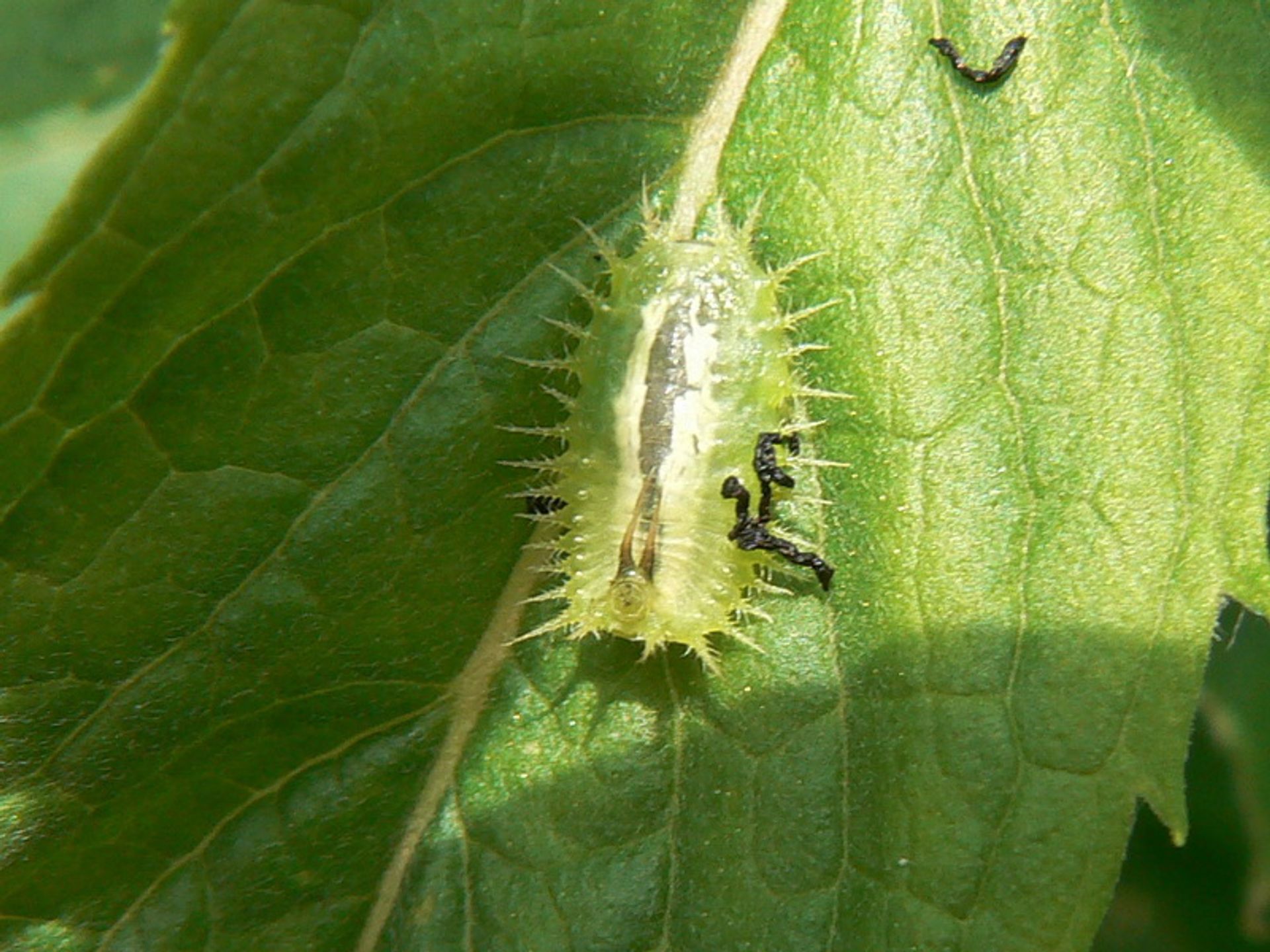
Larvae are very spiny and construct a fecal shield on two spines for defense against enemies and . Specific details of , pupal stages, and time are not documented in available sources.
Behavior
remain on food plants. When disturbed, can move with surprising speed across leaves or drop from vegetation. Larvae use the fecal shield defensively, presenting it toward attackers.
Ecological Role
Herbivore specializing on Lamiaceae; larvae serve as prey for various including lady beetles and spined soldier bugs, though the fecal shield provides partial defense against chewing predators.
Human Relevance
No significant direct economic impact documented. Occasionally encountered in gardens and natural areas where plants occur. Not known to be a pest of cultivated crops.
Similar Taxa
- Cassida rubiginosa (thistle tortoise beetle)Similar flattened body form and defensive larval fecal shield, but distinguished by different plant association (thistles, Asteraceae) and presence of markings on .
- Other Cassida speciesMost other in the possess distinct markings, spots, or patterns on the and , which are absent in C. viridis.
More Details
Defensive adaptations
Larvae bear excrement on two spines on the upper side, forming a mobile 'fecal shield' used for protection. This shield is effective against with chewing mouthparts such as lady beetles, but less effective against piercing predators like spined soldier bugs.
Cryptic morphology
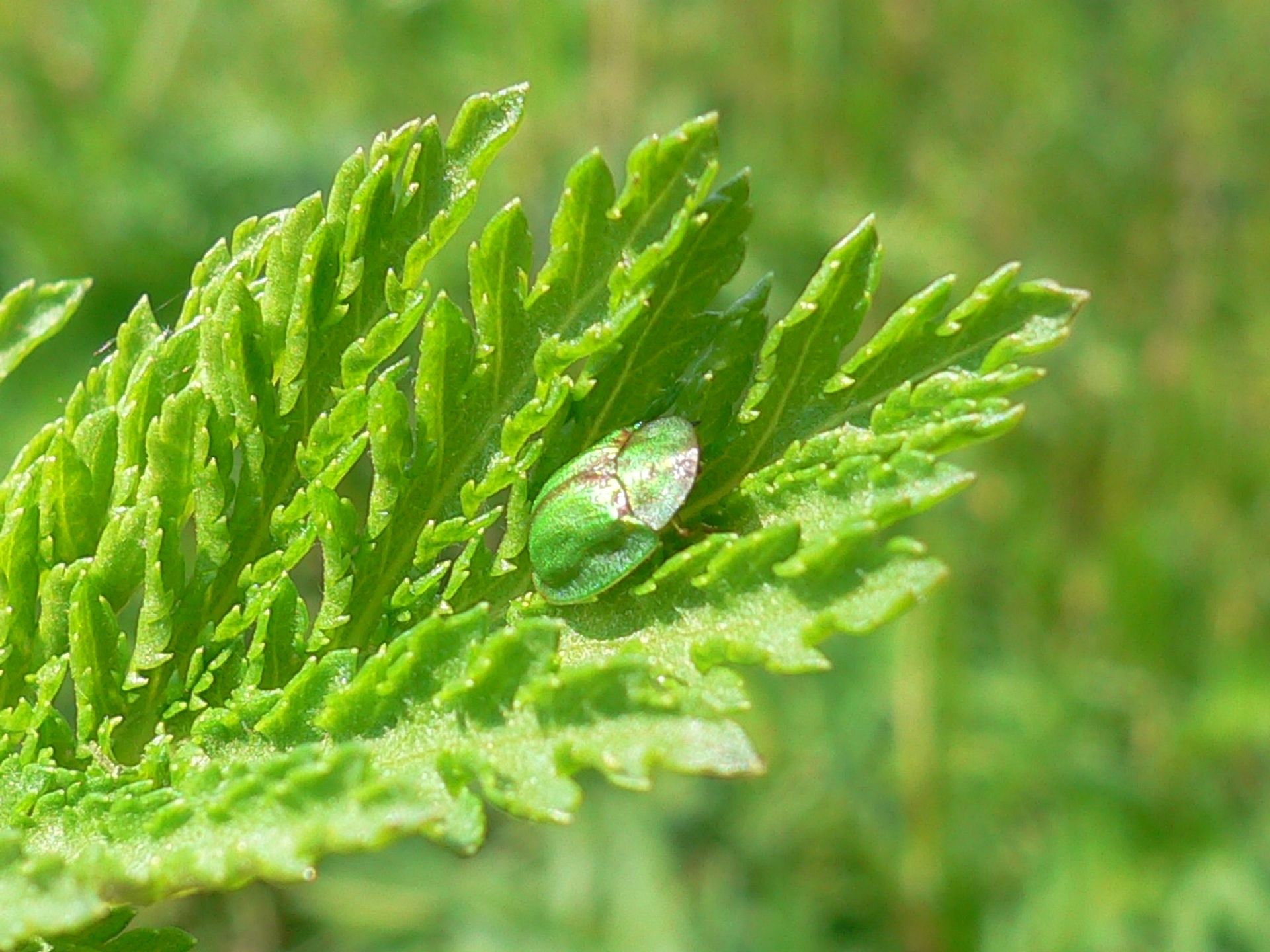
The extremely flat, oval body and uniform green coloration provide strong visual camouflage against plant leaves.
Sources and further reading
- BugGuide
- Wikipedia
- GBIF taxonomy match
- iNaturalist taxon
- NCBI Taxonomy
- Snakeweed Grasshopper
- Green Light: New ID Test Ready for Invasive Mealybug Pest
- Here We Go Again: Another Invasive Pest in Florida Citrus
- Eaters of thistles: Thistle tortoise beetle, Cassida rubiginosa, and Canada thistle bud weevil, Larinus planus — Bug of the Week
- Small but Destructive: Hibiscus Mealybug Emerges as Concerning Pest of Florida Fruits, Ornamentals, Some Row Crops
- New species, old threats: two hillstream suck-loaches discovered in China