
Anthophylax viridis
LeConte, 1850
Green Flower Longhorn
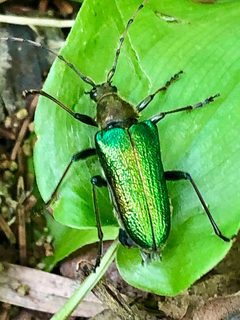
Anthophylax viridis is a of flower longhorn beetle in the Lepturinae. It is found in eastern North America, including the northeastern United States and southeastern Canada. are associated with flowers and are known to visit a variety of blooming plants. The species is one of several in the Anthophylax, which are characterized by their flower-visiting and relatively small size among longhorn beetles.
Pronunciation
How to pronounce Anthophylax viridis: //ˌænθoʊˈfaɪlæks vɪˈrɪdɪs//
These audio files are automatically generated. While they are not always 100% accurate, they are a good starting point.
Identification
Anthophylax viridis can be distinguished from other eastern North American Lepturinae by its small size, green coloration, and the pattern of elytral . The pronotum is typically narrower at the base than the . Males have that are moderately long but do not greatly exceed body length. The Anthophylax contains several similar ; A. viridis is distinguished from A. attenuatus by its more uniformly green coloration and from A. mucronatus by differences in antennal structure and elytral shape.
Images
Habitat
Deciduous and mixed forests, forest edges, and areas with abundant flowering vegetation. are found on flowers in open or semi-open within forested landscapes.
Distribution
Eastern North America: United States (northeastern states) and Canada (New Brunswick, Nova Scotia, Ontario, Prince Edward Island). Records extend westward through the Great Lakes region.
Seasonality
are active from late spring through summer, with peak activity during the flowering period of their plants.
Diet
feed on pollen and nectar of various flowering plants. Larval diet is unknown but presumed to be associated with decaying wood or roots of herbaceous plants, as is typical for Lepturinae.
Life Cycle
Complete with , larva, pupa, and stages. Larval is poorly documented. Adults are the most commonly observed life stage.
Behavior
are and frequent flowers, where they feed on pollen and nectar. They are capable of and are often observed moving among flowering plants.
Ecological Role
function as while feeding on flowers. Larval role in decomposition of plant material is presumed but unverified for this .
Similar Taxa
- Anthophylax attenuatusOverlapping range and similar size; distinguished by more variegated coloration with black markings
- Strangalia speciesSimilar flower-visiting and green coloration; distinguished by longer and different pronotal shape
- Leptura speciesSame and similar use; distinguished by different body proportions and often banded
Sources and further reading
- BugGuide
- Wikipedia
- GBIF taxonomy match
- iNaturalist taxon
- Catalogue of Life
- Snakeweed Grasshopper
- Cudweed Grasshopper
- Grasshoppers of Colorado
- Green Light: New ID Test Ready for Invasive Mealybug Pest
- Here We Go Again: Another Invasive Pest in Florida Citrus
- Small but Destructive: Hibiscus Mealybug Emerges as Concerning Pest of Florida Fruits, Ornamentals, Some Row Crops