
Eupogonius subarmatus
(LeConte, 1859)
Eupogonius subarmatus is a longhorn beetle ( Cerambycidae) described by John Lawrence LeConte in 1859. It belongs to the Lamiinae, one of the largest subfamilies of longhorn beetles. The is known from eastern North America, with records from Canada (Ontario, Québec) and the United States. Like other members of the Eupogonius, it is a small to medium-sized cerambycid with relatively inconspicuous compared to more striking longhorn beetles.
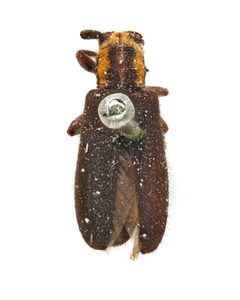
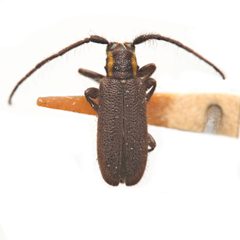
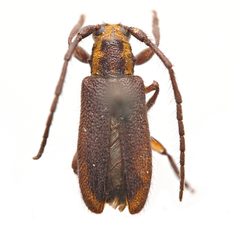
Pronunciation
How to pronounce Eupogonius subarmatus: /juː.poʊˈɡoʊni.əs suːˈbɑːrmɑːtəs/
These audio files are automatically generated. While they are not always 100% accurate, they are a good starting point.
Images
Distribution
Eastern North America. Documented from Ontario and Québec in Canada, and from the United States. GBIF records confirm presence in Canada and the United States, with specific Canadian provincial records for Ontario and Québec.
More Details
Taxonomic History
Described by John Lawrence LeConte, a prominent 19th-century American entomologist, in 1859. LeConte described numerous North American and his work remains foundational for North American coleopteran .
Genus Characteristics
Members of Eupogonius are small to medium-sized longhorn beetles in the tribe Desmiphorini. They typically lack the extremely elongated and bold color patterns seen in some other cerambycid .