
Sternidius alpha
(Say, 1827)
Alpha Long-horned Beetle
A longhorn beetle in the Cerambycidae, first described by Say in 1827. Exhibits multiple color variants across its broad North American range, which led to the description of several later synonymized under the current name. Molecular analysis of the oxidase I gene has revealed three distinct clades among color morphs, suggesting potential cryptic diversity. The species remains taxonomically unsettled pending further study of additional color morphs from different localities.
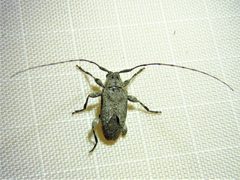
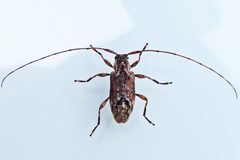
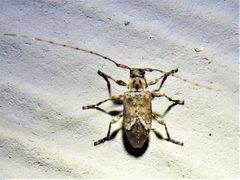
Pronunciation
How to pronounce Sternidius alpha: //stɛrˈnɪdiəs ˈælfə//
These audio files are automatically generated. While they are not always 100% accurate, they are a good starting point.
Identification
Highly variable in coloration across its range; multiple color forms have been described. Distinguishing features from similar Sternidius are not documented in available sources. Molecular data from the barcoding region of oxidase I gene shows three distinct clades, but these do not correspond cleanly to visible color variants.
Images
Distribution
Broadly distributed across North America. Documented from Ontario, Québec, and Vermont in the north.
Similar Taxa
- Other Sternidius speciesSternidius alpha was historically split into multiple based on color variation, which were later synonymized; similar may have been treated as subspecies of S. alpha
More Details
Taxonomic history
Multiple were described based on color variants across the range, but these were subsequently synonymized under Sternidius alpha. Recent molecular work (Raje et al. 2012) suggests this synonymy may mask significant genetic differentiation.
Molecular evidence
Analysis of two color forms revealed three distinct clades in the oxidase I barcoding region, indicating that color variation does not correspond to genetic lineages. The taxonomic significance of these clades remains unresolved pending broader sampling.