
Lagocheirus
Dejean, 1835
Species Guides
2- Lagocheirus araneiformis(Spider Longhorned Beetle)
- Lagocheirus obsoletus(plumeria long-horn borer)
Lagocheirus is a of longhorn beetles in the Lamiinae, established by Dejean in 1835. The genus includes that have been documented as pests of agricultural crops, particularly cassava and sugarcane. One species, Lagocheirus araneiformis, has been recorded with phoretic mites inhabiting specialized pronotal pits, suggesting a possible mutualistic relationship. The genus occurs across a broad geographic range spanning the Americas from the southern United States through Central America and the Caribbean to South America.
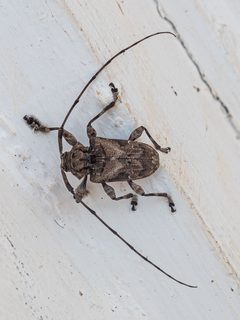
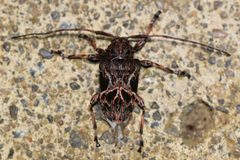
Pronunciation
How to pronounce Lagocheirus: //læɡoʊˈkaɪərəs//
These audio files are automatically generated. While they are not always 100% accurate, they are a good starting point.
Images
Distribution
Lagocheirus occurs from the southern United States (Florida) through Mexico, Central America, and the Caribbean to South America, with records from Argentina, Bolivia, Brazil, Colombia, Ecuador, French Guiana, Guyana, Peru, and Venezuela. The has also been introduced to Pacific islands including Hawaii and the Society Islands.
Host Associations
- Manihot esculenta - pestcassava borer
- Saccharum officinarum - pestsugarcane
Behavior
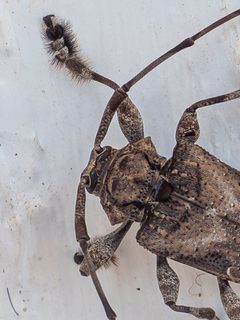
Lagocheirus araneiformis has been observed carrying phoretic mites in specialized pronotal pits, with the pits possibly adapted for mite accommodation.
Human Relevance
Some are agricultural pests. Lagocheirus araneiformis is known as the cassava borer and almácigo borer, attacking cassava and sugarcane crops.
More Details
Mite associations
Research has documented phoretic mites inhabiting pronotal pits of Lagocheirus araneiformis stroheckeri, with authors suggesting these structures may be adapted specifically for mite use.