
Megaderus
Dejean, 1821
Species Guides
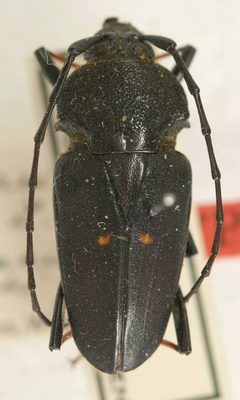
1Megaderus is a of long-horned beetles (Cerambycidae) first described by Dejean in 1821. The genus contains at least two described : Megaderus bifasciatus, distributed across North and Central America, and Megaderus stigma, found in South and Central America. Both species are classified within the Cerambycinae and tribe Trachyderini. The genus is represented by 352 observations on iNaturalist, indicating moderate documentation in citizen science records.


Pronunciation
How to pronounce Megaderus: /mɛˈɡædərəs/
These audio files are automatically generated. While they are not always 100% accurate, they are a good starting point.
Identification
Members of Megaderus can be distinguished from other cerambycine by their placement in the tribe Trachyderini, which typically includes robust, often strikingly patterned long-horned beetles. Specific diagnostic features for the genus are not documented in available sources. The two , M. bifasciatus and M. stigma, are separated by geographic distribution and likely by elytral patterning (M. bifasciatus: two-banded; M. stigma: spotted or marked).
Images
Distribution
The Megaderus has a disjunct distribution spanning the Americas. Megaderus bifasciatus occurs in North America and Central America. Megaderus stigma is found in South America and Central America. The genus thus spans from temperate North America through the Neotropics.
Similar Taxa
- Other Trachyderini generaShares tribe-level characteristics of robust body form and often bold coloration; specific separation requires examination of antennal structure, pronotal shape, and elytral sculpturing not detailed in available sources.
- Megaderus bifasciatus / M. stigmaThe two congeneric overlap in Central America and require careful examination of elytral pattern (banded versus spotted) and potentially genitalic dissection for reliable identification.
More Details
Taxonomic authority
Authorship is sometimes cited as Dejean, 1821, though the exact date of publication may require verification against original source material.
Species diversity
Sources state 'at least two described ,' suggesting potential for additional undescribed or synonymized not currently recognized.