
Batyle ignicollis
(Say, 1824)
Fire-necked Longhorn Beetle
Species Guides
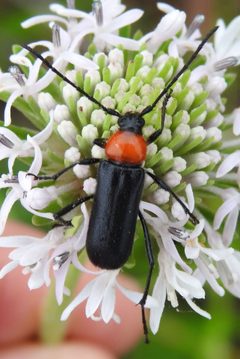
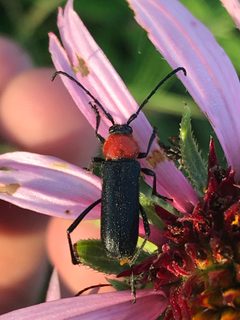
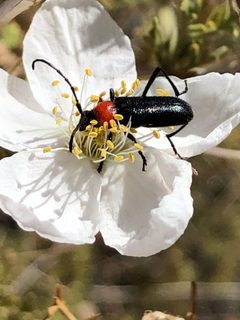
1Batyle ignicollis is a longhorned beetle in the tribe Trachyderini, known for its activity and flower-visiting . It was described by Thomas Say in 1824. The has been documented in sand dune of northwestern Oklahoma, where have been observed resting on inflorescences of Styllingia sylvatica ('s delight), suggesting possible or roosting behavior. The species is attracted to ethanol-based traps, indicating a probable association with fermenting plant materials or dead wood.
Pronunciation
How to pronounce Batyle ignicollis: /ˈbæˌtaɪl iːɡ.nɪˈkɒ.lɪs/
These audio files are automatically generated. While they are not always 100% accurate, they are a good starting point.
Images
Habitat
Sand dunes and adjacent riparian woodlands. Documented specifically from gypsum sand dune systems in northwestern Oklahoma, where individuals were found on inflorescences of Styllingia sylvatica in open dune areas bordered by woodland strips containing Celtis reticulata (netleaf hackberry) and Populus deltoides (eastern cottonwood).
Distribution
North America: documented from the United States (Oklahoma) and based on GBIF records also present in Canada and Mexico. The specific documented occurrence in Oklahoma represents a western in the Great Plains region.
Seasonality
active in spring. Observed in early June in northwestern Oklahoma, with individuals found in abundance on flowering vegetation. The exhibits activity patterns consistent with other Trachyderini, which are typically and flower-associated during adult periods.
Behavior
have been observed resting on inflorescences of Styllingia sylvatica in a characteristic posed position, suggesting roosting or bedding-down , possibly or . The is attracted to ethanol-baited jug traps, indicating response to fermentation volatiles. Adults are capable of and can escape when disturbed.
Human Relevance
Subject of entomological collecting and ecological study. Documented during systematic trapping studies evaluating efficacy of ethanol and wine-based baits for Cerambycidae.
Similar Taxa
- Batyle suturalisCongeneric in the same Batyle, also flower-visiting and , with similar overall body form and coloration patterns in the tribe Trachyderini.
Sources and further reading
- BugGuide
- Wikipedia
- GBIF taxonomy match
- iNaturalist taxon
- NCBI Taxonomy
- Catalogue of Life
- Bee Assassin on Coneflower | Beetles In The Bush
- Spring beetles on Coreopsis flowers | Beetles In The Bush
- First collecting trip of the season! | Beetles In The Bush
- Ted C. MacRae | Beetles In The Bush | Page 5
- Cerambycidae | Beetles In The Bush | Page 10