
Dihammaphora
Chevrolat, 1859
Species Guides
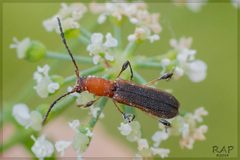
1Dihammaphora is a of longhorn beetles (Cerambycidae) established by Chevrolat in 1859. It belongs to the tribe Rhopalophorini within the Cerambycinae. As a member of this tribe, in this genus likely exhibit the characteristic antennal and body proportions typical of Rhopalophorini, though specific morphological traits vary among constituent species. The genus has been documented through a limited number of observations, with records primarily from the Neotropical region.
Pronunciation
How to pronounce Dihammaphora: /daɪˌhæməˈfɔːrə/
These audio files are automatically generated. While they are not always 100% accurate, they are a good starting point.
Identification
of Dihammaphora can be distinguished from other Rhopalophorini by specific combinations of antennal proportions, elytral punctation patterns, and body shape. Accurate identification to species level requires examination of genitalic structures and comparison with . The genus is part of a tribe characterized by relatively short compared to many other cerambycine groups.
Images
Distribution
Neotropical region, with distributed primarily in Central and South America.
Similar Taxa
- RhopalophoraBoth belong to tribe Rhopalophorini and share general body plan; Dihammaphora typically have more pronounced elytral punctation and different antennal segment proportions.
- HeterachthesSimilar small to medium cerambycine beetles; Heterachthes usually have more elongated bodies and different antennal insertion points compared to Dihammaphora.
More Details
Taxonomic History
The was established by Louis Alexandre Auguste Chevrolat in 1859. The tribal placement in Rhopalophorini has been stable, though the number of included has varied with revisions. The limited number of iNaturalist observations (69) suggests either genuine rarity, restricted specificity, or under-collection relative to other cerambycid genera.
Tribal Affiliation
Rhopalophorini is a tribe of small to medium-sized cerambycine beetles, many of which are associated with woody vegetation. Members typically have shorter than the body and often exhibit contrasting color patterns.