
Odontocera
Audinet-Serville, 1833
Species Guides
1Odontocera is a of longhorn beetles in the Cerambycidae, tribe Rhinotragini. First described by Audinet-Serville in 1833, this genus comprises multiple distributed primarily in the Neotropical region. Members are characterized by elongated bodies and typical of cerambycids. The genus is documented from field observations and museum collections, with records from protected areas in Colombia.
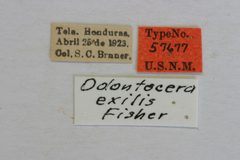
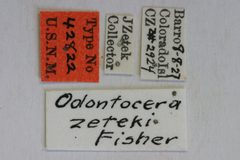
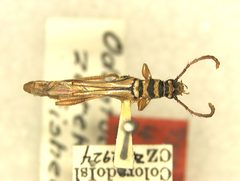
Pronunciation
How to pronounce Odontocera: /oʊˌdɒn.toʊˈsɪə.ra/
These audio files are automatically generated. While they are not always 100% accurate, they are a good starting point.
Identification
As a within Rhinotragini, Odontocera can be recognized by features typical of this tribe: often brightly colored or patterned , elongated body form, and of moderate length relative to body size. Species-level identification requires examination of male genitalia, antennal structure, and precise elytral patterns. Separation from related genera in Rhinotragini such as Rhinotragus and Eclipta depends on details of the pronotal shape, antennal segment proportions, and presence or absence of specific on the and .
Images
Habitat
Neotropical forest , including protected primary forest areas. Documented occurrence in Parque Nacional Natural Serranía de Chiribiquete, Colombia, suggests association with Amazonian and Andean foothill forest . Specific microhabitat preferences within forest strata remain poorly documented.
Distribution
Neotropical region. Confirmed records from Colombia (Parque Nacional Natural Serranía de Chiribiquete). Broader distribution likely includes additional South American countries based on tribe-level , but specific country records require verification.
Similar Taxa
- RhinotragusConvergent body form and coloration within Rhinotragini; distinguished by antennal segment proportions and pronotal patterns
- EcliptaSimilar tribe member with overlapping Neotropical distribution; separated by differences in elytral punctation and male genitalia structure
More Details
Taxonomic history
Established by Audinet-Serville in 1833. Placement in Rhinotragini confirmed by modern phylogenetic studies of Cerambycinae. -level remains active area of research with ongoing descriptions and revisions.
Data limitations
Most published information aggregates at tribe or level; -specific biological data are sparse. iNaturalist records (139 observations) suggest moderate documentation but limited research focus relative to larger cerambycid genera.