
Haplidoeme
Chemsak & Linsley, 1965
Species Guides
1Haplidoeme is a of longhorn beetles in the Cerambycidae, established by Chemsak and Linsley in 1965. The genus contains two described : Haplidoeme punctata and Haplidoeme schlingeri. It is classified within the Cerambycinae and tribe Oemini. Published records for this genus are sparse, with no documented observations in science databases as of current data.
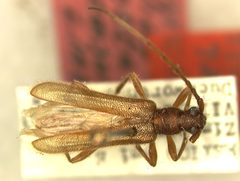
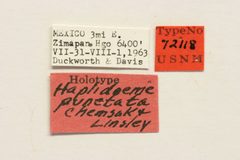
Pronunciation
How to pronounce Haplidoeme: /hæplɪˈdoʊmi/
These audio files are automatically generated. While they are not always 100% accurate, they are a good starting point.
Identification
Haplidoeme can be distinguished from related Oemini by the combination of its generic name authority (Chemsak & Linsley, 1965) and the specific epithets of its constituent . The specific epithet "punctata" suggests a punctate (dotted) surface texture in that species, while "schlingeri" is a patronym. Without access to the original species descriptions, detailed morphological diagnostic features cannot be provided.
Images
Distribution
The is known from the type localities of its two constituent , though specific geographic details are not provided in available sources. The authority (Chemsak & Linsley) and species epithets suggest a Nearctic or Neotropical distribution typical of many Cerambycidae described by these authors.
Similar Taxa
- OemeBoth are within the tribe Oemini, sharing tribal-level characteristics; Haplidoeme was separated from or related to this genus based on morphological distinctions in the original 1965 description.
- DioemeAnother in the Oemini with which Haplidoeme may be confused; the name similarity and shared tribal placement suggest potential historical taxonomic confusion.
More Details
Taxonomic History
The was erected by Chemsak and Linsley in 1965, with Haplidoeme schlingeri as the type . Haplidoeme punctata was added in 1971. Both species descriptions appeared in the Proceedings of the California Academy of Sciences.
Data Deficiency
This has zero observations in iNaturalist and limited presence in major biodiversity databases. The original descriptions in regional scientific journals may contain the only detailed morphological and distributional information.