
Tessaropa
Haldeman, 1847
Species Guides
1Tessaropa is a of longhorn beetles in the Cerambycidae, Cerambycinae, tribe Methiini. The genus was established by Haldeman in 1847 and contains at least eight described distributed across the Americas, including the Caribbean and South America. Most species were described in the late 20th and early 21st centuries, indicating ongoing taxonomic work on this relatively understudied group.
Pronunciation
How to pronounce Tessaropa: //tɛsəˈroʊpə//
These audio files are automatically generated. While they are not always 100% accurate, they are a good starting point.
Identification
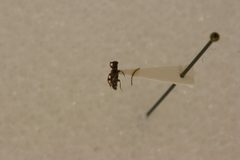
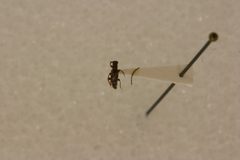
Tessaropa are distinguished from related methiine by their slender, elongate body form and relatively long legs. The type species, Tessaropa tenuipes, exhibits notably slender tibiae and . Species-level identification requires examination of male genitalia and antennal proportions, which vary among the described . The genus lacks the pronounced pronotal seen in some related cerambycine genera.
Images
Distribution
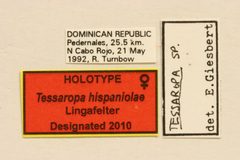
Tessaropa occur from the eastern United States (T. tenuipes) through the Caribbean (T. hispaniolae in Hispaniola, T. luctuosa in Cuba) to South America, including Brazil (T. carioca, T. guanabarina, T. mineira) and Bolivia (T. boliviana). The shows a predominantly Neotropical distribution with one species extending into temperate North America.
Similar Taxa
More Details
Taxonomic history
Tessaropa tenuipes was originally described as Methia tenuipes by Haldeman in 1846, then transferred to Tessaropa when Haldeman established that in 1847. The genus has been subject to recent revisionary work by Martins, Galileo, and Lingafelter, with most described since 1975.