
Hybodera
LeConte, 1873
Species Guides
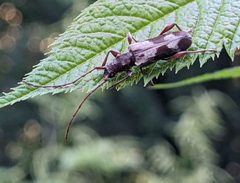
2Hybodera is a of longhorn beetles (Cerambycidae) established by LeConte in 1873. It is the type genus of the tribe Hyboderini within the Cerambycinae. The genus is native to North America. within Hybodera are relatively small cerambycids with distinctive morphological features that separate them from related genera.
Pronunciation
How to pronounce Hybodera: /haɪˈboʊdəra/
These audio files are automatically generated. While they are not always 100% accurate, they are a good starting point.
Identification
Members of Hybodera can be distinguished from other cerambycine by their compact body form and the structure of the pronotum, which lacks the lateral or spines common in many related longhorn beetles. The are relatively short for the , not exceeding the body length. The are often finely punctured and may show subtle color patterns. The tibiae lack the spines found in some similar genera.
Images
Distribution
North America. The occurs primarily in the United States, with records from various regions including the eastern and central states.
Similar Taxa
- Other Hyboderini generaShare tribal characteristics including similar pronotal structure and short , but differ in specific body proportions and elytral sculpturing
- Small Cerambycinae in related tribesMay resemble Hybodera in general size and form, but lack the diagnostic combination of unarmed pronotum and specific antennal proportions
More Details
Taxonomic significance
Hybodera serves as the type for the tribe Hyboderini, a small tribe within the diverse Cerambycinae. The tribal placement reflects shared derived characters among its constituent genera.
Research status
The is relatively poorly studied compared to more speciose cerambycid genera. The 55 iNaturalist observations suggest limited but consistent detection by naturalists, indicating genuine rarity rather than cryptic habits alone.