
Malobidion
Schaeffer, 1908
Species Guides
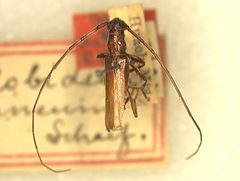
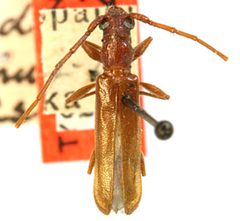
1Malobidion is a of longhorn beetles (Cerambycidae) described by Schaeffer in 1908. The genus contains three described distributed in the southwestern United States and Mexico: M. auricome, M. brunneum, and M. grande. Members of this genus belong to the tribe Hesperophanini within the Cerambycinae. The genus is characterized by moderate body size and relatively sparse documentation in scientific literature.
Pronunciation
How to pronounce Malobidion: /maloʊˈbɪdiˌɒn/
These audio files are automatically generated. While they are not always 100% accurate, they are a good starting point.
Identification
within Malobidion may be distinguished from related hesperophanine by genitalic and antennal characteristics, though specific diagnostic features for the genus as a whole remain poorly documented in accessible literature. The three species differ in coloration and body proportions: M. brunneum is uniformly brown, while M. auricome and M. grande exhibit contrasting patterns.
Images
Distribution
Southwestern United States (Arizona, New Mexico, Texas) and adjacent regions of Mexico. occurrence records are sparse, with most observations concentrated in the Sonoran and Chihuahuan Desert regions.
Similar Taxa
- HesperophanesBoth belong to tribe Hesperophanini and share similar body form; Malobidion are generally smaller and differ in antennal proportions.
- OsmidusAnother hesperophanine with overlapping distribution; separation requires examination of male genitalia and elytral .
More Details
Taxonomic history
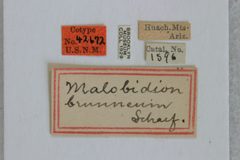
The was erected by Schaeffer in 1908 with M. brunneum as the type . Two additional species were described by Chemsak & Linsley in 1963. The genus has received limited taxonomic attention since its original description.
Collection records
Specimens are infrequently collected, with only 23 observations documented on iNaturalist as of 2024. Museum specimens are primarily housed in North American collections.