
Hypexilis pallida
Horn, 1885
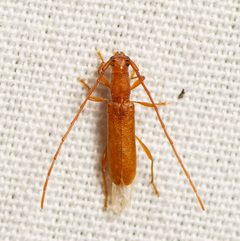
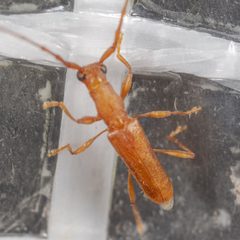
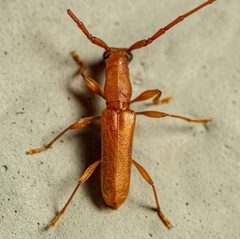
Hypexilis pallida is a of longhorn beetle in the Cerambycidae, first described by George Henry Horn in 1885. It belongs to the tribe Graciliini within the Cerambycinae. The species is known to occur in North America and Middle America, with records from Mexico and the United States. As a member of the Cerambycidae, it possesses the characteristic elongated typical of this family of wood-boring beetles.
Pronunciation
How to pronounce Hypexilis pallida: //hɪp.ɛkˈsiː.lɪs ˈpæl.ɪ.də//
These audio files are automatically generated. While they are not always 100% accurate, they are a good starting point.
Images
Distribution
Recorded from North America and Middle America, specifically Mexico (MX) and the United States (US). Distribution records indicate presence in these regions based on occurrence data, though specific details within these ranges are not documented in available sources.
More Details
Taxonomic placement
Hypexilis pallida is classified within the tribe Graciliini, a group of slender longhorn beetles in the Cerambycinae. The Hypexilis contains characterized by their gracile body form.
Nomenclatural history
The was established by George Henry Horn in 1885, a prominent American entomologist who described numerous North American Coleoptera during the late 19th century.
Sources and further reading
- BugGuide
- Wikipedia
- GBIF taxonomy match
- iNaturalist taxon
- NCBI Taxonomy
- Catalogue of Life
- Those Incredible Digger Bees and Their Nest Parasites | Bug Squad
- Bees, Parasites and Maybe the End? | Bug Squad
- The Amazing Bee-Parasite Research of Leslie Saul-Gershenz | Bug Squad
- A Silver Digger Bee in Flight at Bodega Head | Bug Squad
- Congrats to Our UC Davis Nematologists! | Bug Squad
- Why Silver Digger Bees Are Like Gold | Bug Squad