
Gracilia
Species Guides
1- Gracilia minuta(basket longhorn beetle)
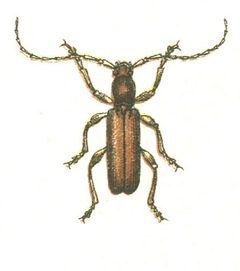
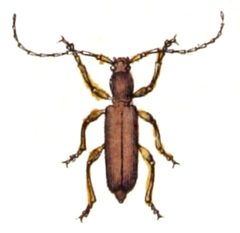
Gracilia is a of longhorn beetles ( Cerambycidae) containing a single , Gracilia minuta. The genus is native to Europe but has been introduced to North and South America, including the United States, Argentina, and Uruguay. It belongs to the diverse group of wood-boring beetles commonly known as longhorn beetles.

Pronunciation
How to pronounce Gracilia: /ɡraˈkiː.li.a/
These audio files are automatically generated. While they are not always 100% accurate, they are a good starting point.
Identification
Gracilia minuta is distinguished from other small cerambycids by its diminutive size (as reflected in its specific epithet) and European origin. Accurate identification requires examination of antennal structure, elytral , and body proportions relative to other minute longhorn beetles.
Images
Distribution
Native to Europe; introduced to the United States, Argentina, and Uruguay.
Human Relevance
Gracilia minuta has been introduced outside its native European range, indicating human-mediated , though specific economic or ecological impacts of this introduction have not been documented.
Similar Taxa
- Other small Cerambycidae generaGracilia minuta may be confused with other minute longhorn beetles due to its small size; precise identification requires attention to antennal and body proportions.
More Details
Taxonomic note
The name Gracilia has been used in multiple unrelated taxonomic contexts, including as a section of plants (Nothoscordum sect. Gracilia in Amaryllidaceae) and as a synonym in fish classification. In entomology, it refers specifically to this cerambycid beetle genus.
Species diversity
Gracilia is , containing only Gracilia minuta. This is relatively uncommon among cerambycid , most of which contain multiple .