
Dere thoracica
White, 1855
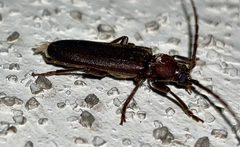
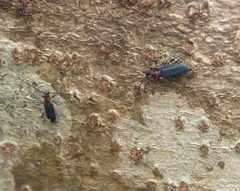
Dere thoracica is a longhorn beetle (Cerambycidae) first reported in the United States in 2021. The was previously known from East Asia (China, Japan, Korea) before its detection in the eastern United States, where it has since undergone range expansion. As a cerambycid beetle, it belongs to a whose larvae are predominantly wood-borers, though specific biological details for this species remain limited in published literature.
Pronunciation
How to pronounce Dere thoracica: //ˈdɛɹi θɔːˈræ.sɪ.kə//
These audio files are automatically generated. While they are not always 100% accurate, they are a good starting point.
Identification
As a member of the Dere within the tribe Cleomenini, D. thoracica can be distinguished from related cerambycines by characters of the and , though specific diagnostic features require examination of morphological details described in taxonomic literature. The was recognized as distinct upon its first U.S. detection through comparison with East Asian specimens.
Images
Distribution
Native to East Asia, with records from China, Japan, and Korea. First detected in the United States in the eastern region, where it has subsequently expanded its range. The ' establishment in North America represents a recent range extension.
Human Relevance
The detection of D. thoracica in the United States has prompted monitoring efforts to track its range expansion and potential impacts. As a non-native cerambycid, its wood-boring raises questions about possible effects on native and cultivated woody plants, though specific pest status has not been established.
Similar Taxa
- Other Dere species share the tribe Cleomenini and require careful morphological examination to distinguish; D. thoracica's thoracic patterning and elytral differ from related .
- Native U.S. CerambycinaeMay be mistaken for other longhorn beetles in general appearance, but Dere thoracica's specific combination of antennal length, body proportions, and coloration allows separation from most native fauna.
More Details
Detection History
The first U.S. report of D. thoracica was published in 2021 in The Coleopterists Bulletin, documenting the ' arrival and providing initial notes on recognition and . A subsequent 2024 publication in the same journal updated information on use, detection methods, and distribution in the eastern United States, indicating active range expansion since initial detection.
Research Gaps
Despite two recent publications, detailed biological information—including larval plants, complete , and ecological impacts in the introduced range—remains incompletely documented for this .
Sources and further reading
- BugGuide
- GBIF taxonomy match
- iNaturalist taxon
- Catalogue of Life
- They Want the Weather to 'Bee Nice' | Bug Squad
- Ducks Vs. Bees | Bug Squad
- Harvester Ant Nest Rims Boost Native, Nonnative Plants Alike
- The Painful but Fascinating Stings of Harvester Ants
- Bug Eric: Fungus Party-y-y!
- Heroes, Not Headaches: Reframing the Reputation of Harvester Ants
- Updates on the Host Use, Detection, and Distribution of Dere thoracica White (Coleoptera: Cerambycidae) in the Eastern United States
- First Report of Dere thoracica White (Coleoptera: Cerambycidae: Cerambycinae) in the United States, with Notes on Its Discovery, Recognition, Biology, and Habits