
Pronocera
Motschulsky, 1859
Species Guides
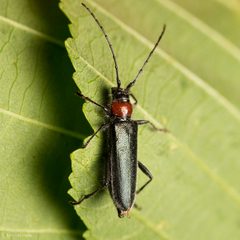
1Pronocera is a of long-horned beetles (Cerambycidae) established by Motschulsky in 1859. The genus contains three described : Pronocera angusta, P. collaris, and P. sibirica. Pronocera angusta has been studied in detail for its , , and in relation to Norway spruce forests. The genus belongs to the tribe Callidiini within the Cerambycinae.
Pronunciation
How to pronounce Pronocera: //proʊˈnoʊ.sɛ.rə//
These audio files are automatically generated. While they are not always 100% accurate, they are a good starting point.
Images
Distribution
Pronocera angusta is distributed across the natural range of Norway spruce (Picea abies), with its occurrence tied to spruce-dominated forests. The distribution of the extends across northern Eurasia based on epithets (sibirica) and documented records.
Host Associations
- Picea abies - larval Norway spruce is the primary tree for larvae of Pronocera angusta; also feed on this
Life Cycle
Pronocera angusta has a tied to Norway spruce, with larvae developing within the wood and emerging to feed on the same tree . The complete developmental stages include , larva, pupa, and adult, with detailed described for all stages.
Ecological Role
As a wood-boring cerambycid, Pronocera contributes to the decomposition of dead and dying Norway spruce in and montane forests. Larval tunneling creates for other saproxylic organisms and accelerates nutrient cycling in spruce .
Human Relevance
Pronocera angusta has been studied as a forest pest due to its association with Norway spruce, though its economic impact appears limited compared to more destructive cerambycids. The serves as an indicator of spruce forest conditions in ecological studies.
Similar Taxa
- Other Callidiini generaPronocera can be distinguished from related Callidiini by specific morphological features of the copulatory organs and body structure, though precise diagnostic characters require examination of and detailed morphological study
More Details
Taxonomic Note
Some sources incorrectly state that Pronocera collaris is the only in the ; however, three species are currently recognized: P. angusta, P. collaris, and P. sibirica.
Research Status
Detailed biological and ecological information is available primarily for P. angusta; the other two remain poorly studied with most knowledge inferred from -level characters or requiring direct examination of specimens.