
Phymatodes obliquus
Casey, 1891
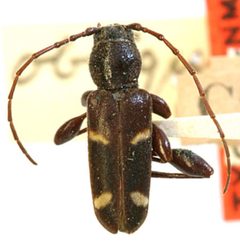
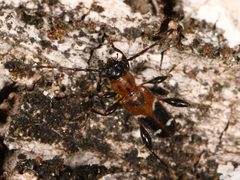
Phymatodes obliquus is a of longhorn beetle in the Cerambycidae. It was formerly confused with P. decussatus due to misapplication of that name by Linsley (1964), but was correctly identified as a distinct species by Swift & Ray (2010). The species is primarily associated with oak (Quercus) in western North America.

Pronunciation
How to pronounce Phymatodes obliquus: //faɪˈmeɪtəˌdiːz oʊˈblɪkwəs//
These audio files are automatically generated. While they are not always 100% accurate, they are a good starting point.
Identification
Distinguished from true Phymatodes decussatus (which is associated with walnut, Juglans) by plant association and subtle morphological differences. Swift & Ray (2010) provide diagnostic notes and comparative illustrations in their revision of the . The was previously known under the misapplied name P. decussatus in Linsley's 1964 treatment.
Images
Habitat
Associated with oak woodlands and forests; larvae develop in dead oak branches and trunks.
Distribution
Pacific coastal area of North America and Baja California. Distribution records from British Columbia, California, and Mexico.
Diet
Larvae feed on dead oak (Quercus) wood; likely feed on sap, nectar, or other plant exudates but specific adult diet has not been documented.
Host Associations
- Quercus - larval primary ; larvae develop in dead oak branches and trunks
Ecological Role
Wood decomposer; larvae contribute to nutrient cycling in oak forest .
Human Relevance
Subject of taxonomic revision clarifying nomenclatural confusion in the Phymatodes.
Similar Taxa
- Phymatodes decussatusFormerly confused with P. obliquus due to misapplication of the name decussatus by Linsley (1964); true P. decussatus is associated with walnut (Juglans) rather than oak
- Phymatodes juglandisFormerly used for the true P. decussatus; now synonymized under P. decussatus
Misconceptions
The name Phymatodes decussatus was incorrectly applied to this by Linsley (1964); the true P. decussatus is a walnut-associated species. This confusion persisted until Swift & Ray (2010) clarified the based on examination of .