
Eubriinae
Lacordaire, 1857
Genus Guides
3- Acneus(water-penny beetles)
- Dicranopselaphus(water-penny beetles)
- Ectopria(water penny beetles)
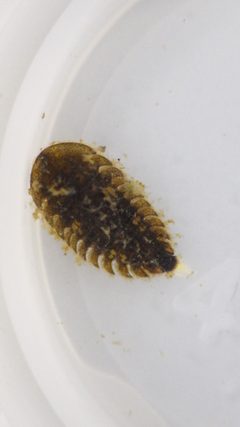
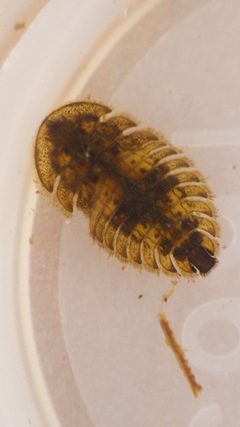
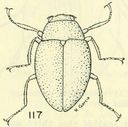
Eubriinae is a of water penny beetles (Psephenidae) comprising approximately 15 and 144 , with greatest diversity in Asia. are distinguished by a convex body form, or pronotum with exposed , non-tapering maxillary palpus apex, and five abdominal ventrites. Larvae are aquatic and exhibit a metapneustic with positioned near the bases of paratergites VIII. The subfamily exhibits nearly worldwide distribution except Antarctica and some oceanic islands including New Zealand.
Pronunciation
How to pronounce Eubriinae: //juˈbriːɪniː//
These audio files are automatically generated. While they are not always 100% accurate, they are a good starting point.
Identification
distinguished from other Psephenidae by combination of: or pronotum with exposed (vs. head concealed in some groups); maxillary palpus with non-tapering apex; mesosternal process with truncate or emarginate apex; five abdominal ventrites. Larvae identified by paratergites VII not reaching segment IX, absence of external gills, and metapneustic respiration with near bases of paratergites VIII. Oriental keyed in Lee et al. 1993.
Images
Habitat
Larvae inhabit diverse lotic and lentic aquatic environments ranging from sluggish seeps to moderately swift streams and small rivers. Non-flattened, non-streamlined larval are predominantly associated with slowly flowing water. are primarily terrestrial, occurring in riparian vegetation and debris adjacent to larval .
Distribution
distribution across all major biogeographic regions except Antarctica. Absent from New Zealand and some oceanic islands. Greatest in Asia. In the Neotropics, confirmed South American records include Neoeubria and Tychepsephus, with Tychepsephus now documented from both Chile and Argentina.
Life Cycle
Larval development extends over multiple years. occurs almost exclusively in terrestrial environments. are short-lived, do not feed, and are restricted to terrestrial near larval waters.
Behavior
are non-feeding and short-lived, restricted to riparian vegetation and debris. documented in some .
Similar Taxa
- PsepheninaeOther of Psephenidae; distinguished by larval characters including different paratergite and structure.
- EubrianacinaeFormerly treated as within Psephenidae; and larval morphological differences in body form and pronotal structure.
More Details
Taxonomic history
Eubriinae was established by Lacordaire in 1857. The has undergone significant revision, with Oriental keyed by Lee et al. (1993) and Chilean fauna revised by Jäch et al. (2022). The genus Tychepsephus, previously considered to Chile, is now known from Argentina.
Larval morphology
Two distinct larval have been described within Tychepsephus, suggesting intraspecific or interspecific variation in body form that may correlate with microhabitat differences in current velocity.
Sources and further reading
- BugGuide
- Wikipedia
- iNaturalist taxon
- Catalogue of Life
- Eubria mesoamericana Barr and Shepard (Coleoptera: Psephenidae: Eubriinae), a New Psephenid Species from Central America with an Enigmatic Generic Distribution
- A revision of the genus Homoeogenus Waterhouse with notes on the immature stages of H.laurae sp.n. (Coleoptera: Psephenidae: Eubriinae)
- A revision of the Chilean water penny genus Tychepsephus Waterhouse, 1876 (Coleoptera, Psephenidae, Eubriinae), with description of a second species and two larval morphotypes, and notes on other Chilean Psephenidae