
Zenoa
Say, 1835
Species Guides
1- Zenoa picea(Serrate Cedar Beetle)
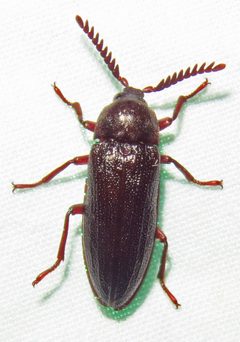
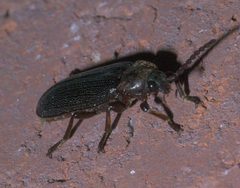
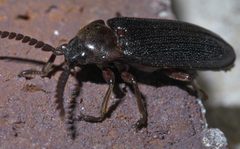
Zenoa is a of beetles in the Callirhipidae, containing the single Zenoa picea. The genus represents the only member of the Callirhipidae family occurring north of Mexico. are active during summer months and are attracted to lights. The species was historically considered uncommon due to limited collection records, though subsequent studies have expanded its known geographic range considerably.
Pronunciation
How to pronounce Zenoa: //ˈze.no.a//
These audio files are automatically generated. While they are not always 100% accurate, they are a good starting point.
Identification
The only North American representative of the Callirhipidae. can be distinguished from similar beetles by family-level characters including the distinctive and body form typical of Callirhipidae. Larvae are elongate, cylindrical, and adapted for burrowing in decaying wood.
Images
Habitat
Associated with decaying wood of conifers, particularly pine (Pinus spp.). Larvae develop in rotten logs and stumps.
Distribution
Eastern and central United States, documented from 26 states and the District of Columbia. Range extends from Florida north to New Jersey, west to Iowa and Texas. No records from Mexico or Canada.
Seasonality
are active during summer months.
Diet
Larvae feed on decaying coniferous wood, acting as saproxylic decomposers.
Host Associations
- Pinus - larval development substratepine; decaying wood used by larvae
Life Cycle
Holometabolous; includes , larval, pupal, and stages. Larvae are elongate, cylindrical, and adapted for burrowing in decaying wood. occurs within the larval gallery in the wood substrate.
Behavior
Larvae are saproxylic and create galleries in decaying conifer wood. are attracted to lights.
Ecological Role
Decomposer; contributes to nutrient cycling in forest through breakdown of decaying coniferous wood.
More Details
Taxonomic note
The single in this has been cited with inconsistent epithet spelling as both 'picea' and 'piceus' in various sources. The original description by Palisot de Beauvois in 1805 used 'picea'.
Historical rarity
Prior to expanded survey efforts, this was considered uncommon and known from only a few specimens. Increased documentation through collection records and citizen science observations has revealed a broader distribution than previously recognized.
Sources and further reading
- BugGuide
- Wikipedia
- GBIF taxonomy match
- iNaturalist taxon
- Catalogue of Life
- Immature Stages of Zenoa picea (Palisot de Beauvois, 1805) (Coleoptera: Dryopoidea: Callirhipidae): Notes on Morphology and Distribution
- Distribution Records for <i>Zenoa Picea</i> (Palisot De Beauvois, 1805) (Coleoptera: Callirhipidae) From the United States.