
Simplocaria semistriata
(Fabricius, 1794)
pill beetle
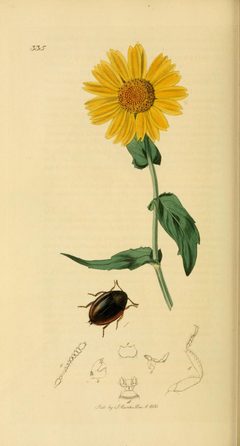
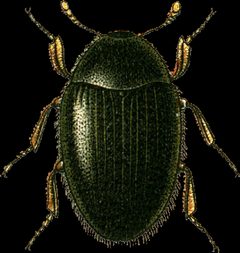
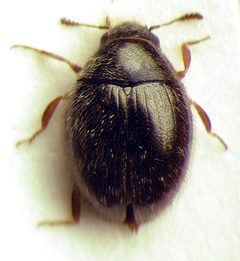
Simplocaria semistriata is a of pill beetle in the Byrrhidae, first described by Fabricius in 1794. It is one of approximately 30 species in the Simplocaria. The species has been recorded across a broad geographic range spanning Europe, Northern Asia (excluding China), and North America. Pill beetles in this family are known for their ability to conglobate—roll into a ball—and often inhabit moist, mossy environments.
Pronunciation
How to pronounce Simplocaria semistriata: //ˌsɪmpləˈkɛəriə ˌsɛmɪˈstraɪətə//
These audio files are automatically generated. While they are not always 100% accurate, they are a good starting point.
Identification
The 'semistriata' may indicate diagnostic elytral striation patterns that distinguish it from . Within the Simplocaria, identification to level requires examination of elytral and potentially male genitalia. The species is distinguished from other pill beetle genera by the combination of body shape and antennal structure characteristic of Simplocaria.
Images
Appearance
As a member of Byrrhidae, S. semistriata likely exhibits the characteristic pill beetle : small, oval, and convex body form adapted for conglobation. The epithet 'semistriata' suggests partial striation—possibly referring to partially ridged or lined . Specific coloration and body measurements are not documented in available sources.
Habitat
Members of Byrrhidae typically inhabit moist, mossy, or liverwort-rich environments, often in association with rocks, decaying wood, or stream margins. Specific preferences for S. semistriata are not documented.
Distribution
Documented from Europe, Northern Asia (excluding China), and North America. GBIF records indicate presence in Belgium (BE). The broad distribution suggests either natural cosmopolitanism or potential cryptic .
Behavior
Like other Byrrhidae, S. semistriata likely exhibits conglobation —rolling into a compact ball when disturbed. This defensive behavior is a -wide characteristic.
Ecological Role
As a member of Byrrhidae, likely contributes to decomposition processes in moist microhabitats, though specific ecological functions for this are undocumented.
Human Relevance
No documented direct interactions with humans. Like many small beetles, may be incidentally encountered by naturalists and entomologists in field surveys.
Similar Taxa
- Simplocaria metallicaCongeneric with potentially overlapping distribution; requires careful examination of elytral for separation.
- Byrrhus spp.Same but different ; typically larger and with different antennal club structure.
More Details
Taxonomic History
First described by Johan Christian Fabricius in 1794, a prominent Danish entomologist of the late 18th century. The original combination and any subsequent taxonomic changes are not detailed in available sources.
Observation Data
iNaturalist records 64 observations of this , indicating it is documented but not frequently encountered by citizen scientists.