
Simplocaria
Stephens, 1829
pill beetles
Species Guides
2- Simplocaria metallica(Metallic Pill Beetle)
- Simplocaria semistriata(pill beetle)
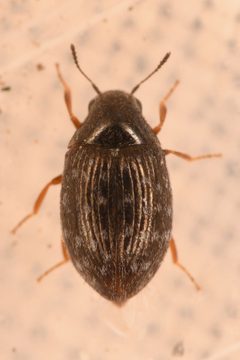
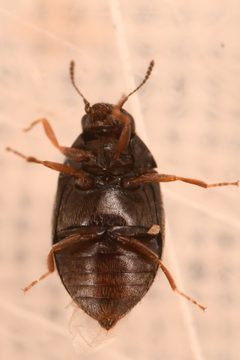
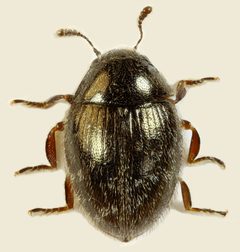
Simplocaria is a of pill beetles ( Byrrhidae) established by Stephens in 1829. The genus contains more than 30 described . Members of this genus are associated with forest in northern regions. Simplocaria metallica has been specifically studied in northern Alberta, Canada, in relation to forest habitat characteristics.
Pronunciation
How to pronounce Simplocaria: //sɪm.ploʊˈkɛɹ.i.ə//
These audio files are automatically generated. While they are not always 100% accurate, they are a good starting point.
Identification
Simplocaria are pill beetles, characterized by their compact, rounded body form that allows them to conglobate (roll into a ball). As members of the tribe Simplocariini, they can be distinguished from related within Byrrhidae by specific morphological features of the tribe, though precise diagnostic characters for the genus require examination of detailed morphological traits not specified in available sources.
Images
Habitat
Forest , as documented for Simplocaria metallica in northern Alberta, Canada. The appears to be associated with northern forest .
Distribution
Recorded from Denmark (DK), Norway (NO), and Sweden (SE) in GBIF distribution records. Simplocaria metallica specifically documented from northern Alberta, Canada. The likely has a Holarctic distribution given these records.
Behavior
Pill beetles in this exhibit conglobation —rolling into a compact ball when disturbed, a defensive common to the Byrrhidae.
Similar Taxa
- ByrrhusAnother in Byrrhidae; Simplocaria is distinguished by tribal placement in Simplocariini versus Byrrhini
- CytilusRelated pill beetle in Byrrhidae; Simplocaria can be separated by tribal and generic morphological characters
More Details
Taxonomic history
The was established by Stephens in 1829 and is the type genus of the tribe Simplocariini within Byrrhinae.
Research note
Simplocaria metallica has been the subject of specific association studies in Canada, but most in the lack detailed biological documentation.