Acmaeodera quadrivittata
Horn, 1870
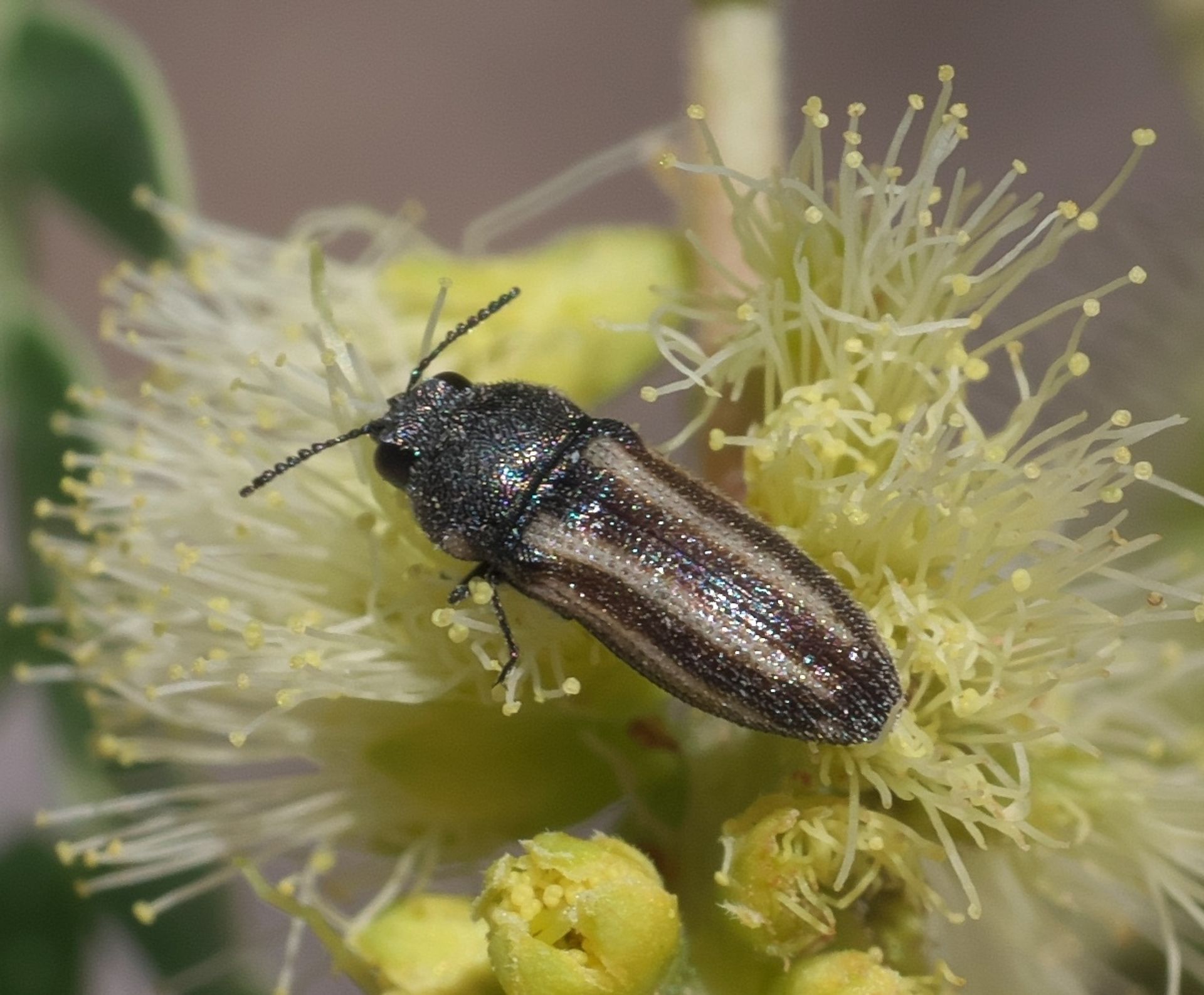
Acmaeodera quadrivittata is a metallic wood-boring beetle in the Buprestidae, described by Horn in 1870. The occurs in Central America and North America. Field observations indicate it is attracted to bottle traps, with specimens collected in southwestern U.S. including pinyon-juniper woodlands at elevations around 4500 feet.
Pronunciation
How to pronounce Acmaeodera quadrivittata: /ækmiːoʊˈdɛrə ˌkwɒdrɪvɪˈteɪtə/
These audio files are automatically generated. While they are not always 100% accurate, they are a good starting point.
Identification
The specific epithet "quadrivittata" (meaning four-banded) likely refers to elytral markings, though detailed diagnostic features distinguishing this from are not documented in available sources. Identification to species level requires examination of morphological characters not described here.
Images
Habitat
Collected in alpine pinyon-juniper woodland at approximately 4500 feet elevation in the Spring Mountains of southern Nevada. Associated with Pinus monophylla (single-leaf pinyon pine) and Juniperus osteosperma (Utah juniper) .
Distribution
Central America and North America. Specific collection records include the Spring Mountains (Kyle Canyon area) in southern Nevada, USA.
Seasonality
have been collected in early September in the southwestern United States.
Behavior
Attracted to bottle traps, with both yellow and blue traps documented as effective. Has been observed in trap catches alongside numerous bees.
Similar Taxa
- Acmaeodera raschkoiSympatric in the Spring Mountains of Nevada; both attracted to bottle traps in similar pinyon-juniper . A. raschkoi was described more recently and specifically targeted in trapping efforts at the same location where A. quadrivittata was collected.
- Acmaeodera mixtaOccurs in similar bottle trap in the southwestern U.S., though at different localities (documented from northwestern Oklahoma traps).
More Details
Trapping methodology
Specimens were collected using white, yellow, and blue bottle traps baited with propylene glycol and red wine. At one site, yellow and blue traps both captured numerous individuals, while a white trap at the same location was pulled from the ground but retained some specimens.
Co-collected fauna
At the Kyle Canyon site, bottle traps containing A. quadrivittata also captured many bees (for colleague Mike Arduser) and a larger unidentified .