
Acmaeodera mariposa
Horn, 1878
Mariposa Jewel Beetle
Species Guides
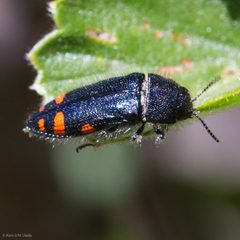
1Acmaeodera mariposa is a metallic wood-boring beetle in the Buprestidae, described by Horn in 1878. The is found in North America and comprises two : A. m. mariposa and A. m. dohrni. It belongs to a group of jewel beetles associated with Cercocarpus (mountain mahogany) plants in western North America, with confirmed breeding records from dead branches of this plant .
Pronunciation
How to pronounce Acmaeodera mariposa: /ˌæk.mi.oʊˈdɛr.ə ˌmær.ɪˈpoʊ.sə/
These audio files are automatically generated. While they are not always 100% accurate, they are a good starting point.
Identification
This can be distinguished from other Acmaeodera by its association with Cercocarpus plants in western North America. The two , A. m. mariposa and A. m. dohrni, are distinguished by subtle morphological differences established by Horn (1878). Differentiation from the numerous other species in this large requires examination of detailed morphological characters including prosternal structure, elytral , and maculation patterns. Comparison with or consultation with literature is recommended for definitive identification.
Images
Appearance
As a member of the Acmaeodera, this exhibits the characteristic metallic coloration typical of jewel beetles. Specific morphological details of A. mariposa are not well documented in available sources, though the genus is generally characterized by compact, somewhat flattened bodies with metallic green, blue, , or bronze coloration. The typically display variable maculations or patterns. The two (mariposa and dohrni) presumably differ in subtle morphological features, though distinguishing characteristics are not specified in available literature.
Habitat
Associated with Cercocarpus (mountain mahogany) vegetation in mountainous regions of western North America. The plant occurs on dry slopes and rocky terrain, particularly on the eastern flank of the Sierra Nevada and similar montane environments. Beetles are found in areas where dead branches of the host plant are available for larval development.
Distribution
North America; specifically recorded from the western United States in association with Cercocarpus plants. The has been documented from California and surrounding mountainous regions of the western Nearctic.
Host Associations
- Cercocarpus ledifolius - breeding Confirmed breeding in dead branches; one of nine buprestid confirmed to breed in Cercocarpus
Life Cycle
Larvae are wood-borers, developing in dead branches of the plant Cercocarpus. The larval stage tunnels through wood, consuming material and packing behind them. Development likely spans one or more years, typical for the . emerge and are presumably active during spring and early summer, consistent with patterns observed in related Acmaeodera .
Behavior
is not specifically documented for this . Related species in the are , often found on flowers feeding on pollen. The association with Cercocarpus suggests adults may be found on or near plants, though specific activity patterns remain unrecorded.
Ecological Role
As a wood-boring , larvae contribute to nutrient cycling by breaking down dead woody material of the plant. The is one of approximately two dozen buprestids associated with Cercocarpus in North America, representing part of a specialized fauna dependent on this plant . Five buprestid species, including A. mariposa, have been recorded exclusively from Cercocarpus.
Human Relevance
Of interest to entomologists and collectors due to its association with Cercocarpus and its status within a specialized -plant fauna. The has been documented in faunal surveys and host-plant association studies. No economic importance or pest status has been recorded.
Similar Taxa
- Acmaeodera rubrocupreaAlso associated with Cercocarpus; both occur in similar western montane
- Other Cercocarpus-associated AcmaeoderaApproximately two dozen buprestid share this plant association; identification requires detailed morphological examination
More Details
Subspecies
Two are recognized: Acmaeodera mariposa mariposa Horn, 1878 (nominate form) and Acmaeodera mariposa dohrni Horn, 1878. The distinction between these forms is based on morphological differences established in the original description.
Host Plant Specialization
Acmaeodera mariposa is one of nine buprestid confirmed to breed within dead branches of Cercocarpus, and one of five species recorded exclusively from this plant . This level of specialization is notable in a where many species have broader host ranges.
Sources and further reading
- BugGuide
- Wikipedia
- GBIF taxonomy match
- iNaturalist taxon
- Catalogue of Life
- All Flights Lead to the Butterfly Summit | Bug Squad
- Rosaceae | Beetles In The Bush | Page 2
- April | 2010 | Beetles In The Bush | Page 2
- Nevada | Beetles In The Bush | Page 3
- An uncommon fall-active Acmaeodera | Beetles In The Bush
- Acmaeodera carlota in northern Arizona | Beetles In The Bush