
Chrysobothris cribraria
Mannerheim, 1837
Sifting Metallic Wood-borer
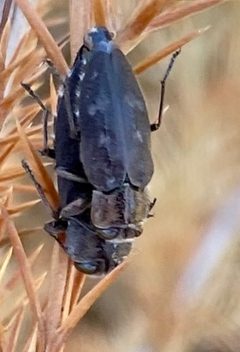
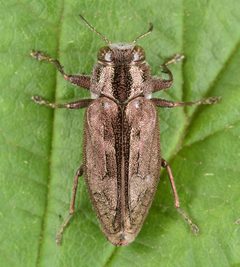
Chrysobothris cribraria is a metallic wood-boring beetle in the Buprestidae, first described by Mannerheim in 1837. It is found in North America, with records from Canada (Alberta, Manitoba, Ontario) and the United States. The has been collected from dead Pinus echinata (shortleaf pine) saplings in Oklahoma and from fallen dead branches of Pinus clausa (sand pine) in Florida, indicating an association with dead or dying coniferous wood.
Pronunciation
How to pronounce Chrysobothris cribraria: //ˌkrɪsəˈbɒθrɪs krɪˈbrɛəriə//
These audio files are automatically generated. While they are not always 100% accurate, they are a good starting point.
Images
Habitat
Coniferous woodlands; specifically associated with dead or dying pine trees. Documented from dead Pinus echinata saplings in Oklahoma and fallen dead Pinus clausa branches in Florida. The appears to utilize dead conifer wood as .
Distribution
North America. Canadian records: Alberta, Manitoba, Ontario. United States records include Oklahoma, Florida, and likely additional states given the broad North American range.
Host Associations
- Pinus echinata - breeding/developmentCollected from small dead saplings
- Pinus clausa - breeding/developmentCollected from fallen dead branches
Behavior
have been collected by beating dead pine branches and saplings, suggesting they may be found on or near their material. One observation notes an individual found on the underside of a fallen branch.
Similar Taxa
- Chrysobothris chrysoelaAnother Chrysobothris found in similar (oak-associated in Florida), requiring careful examination to distinguish
- Chrysobothris dentipesCollected from live Pinus echinata in same region (Oklahoma), differing in condition preference
More Details
Collection method
Specimens have been successfully collected by beating dead pine branches and saplings with a net, indicating this is an effective survey technique for the .
Etymology
The specific epithet 'cribraria' is Latin, meaning 'pertaining to a sieve' or 'sifter', likely referring to some aspect of the 's appearance or , and reflected in the 'Sifting Metallic Wood-borer'.