
Brachyina
Cobos 1979
Genus Guides
2- Brachys(Leaf-mining jewel beetles)
- Taphrocerus
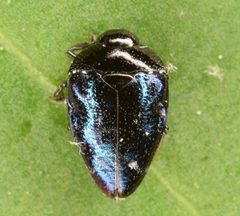
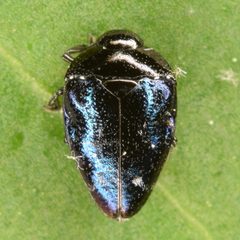
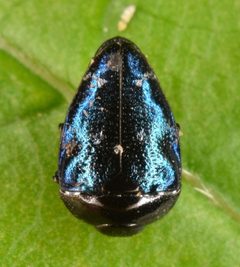
Brachyina is a subtribe within the tribe Trachyini ( Buprestidae), established by Cobos in 1979. The subtribe includes small to minute metallic wood-boring beetles, with Taphrocerus being the primary in North America. Members are characterized by their compact body form and association with herbaceous or woody vegetation. The group is taxonomically stable but relatively understudied compared to other buprestid lineages.
Pronunciation
How to pronounce Brachyina: /ˈbræ.kɪˌaɪ.na/
These audio files are automatically generated. While they are not always 100% accurate, they are a good starting point.
Identification
Brachyina can be distinguished from the related subtribe Pachyschelina by the following combination of characters: body generally more elongate and less robust; pronotum with lateral margins more or less parallel or slightly converging posteriorly; and tarsal claws with distinct . Taphrocerus within Brachyina are further recognized by their small size (typically 3–7 mm), cylindrical body form, and that are often uniformly colored or with subtle maculations rather than the bold contrasting patterns seen in many Pachyschelus species.
Images
Habitat
of Brachyina, particularly Taphrocerus, inhabit a variety of environments including forests, woodlands, and riparian areas. are frequently found on foliage of herbaceous plants and shrubs. Larval development occurs in stems and twigs of living or recently dead herbaceous plants and woody vegetation, with some species associated with specific plants.
Distribution
The subtribe Brachyina has a broad distribution, with representatives in the Nearctic, Neotropical, Palearctic, and Oriental regions. In North America, Taphrocerus range across the continental United States and into southern Canada, with particular diversity in the eastern and central regions. The Taphrocerus extends southward through Mexico and into Central and South America.
Seasonality
activity varies by and latitude. In temperate North America, most Taphrocerus species are active from late spring through summer (May–August), with some species exhibiting bimodal activity patterns. In subtropical and tropical regions, adult presence may extend across longer periods or occur during wet seasons.
Host Associations
- Taphrocerus floridanus - larval Associated with herbaceous vegetation; specific plants not fully documented
Life Cycle
Development includes , larval, pupal, and stages. Larvae are stem miners, feeding internally in pith or cambium of plant stems. Larval development typically spans one year in temperate , with occurring within the stem. Adults emerge through exit holes chewed through the stem . Some species may exhibit partial multivoltinism in southern portions of their range.
Behavior
are and often found resting on foliage. They are relatively slow-moving compared to other buprestids and do not exhibit the rapid, erratic characteristic of many metallic wood-boring beetles. When disturbed, they may drop from vegetation or tuck their appendages tight against the body. The group does not display the pronounced -mimicry behaviors seen in some cerambycid beetles.
Ecological Role
As stem-boring larvae, Brachyina contribute to nutrient cycling by breaking down herbaceous and woody plant material. Their feeding activity creates entry points for fungal and bacterial decomposers. In some systems, they may influence plant structure through selective herbivory, though their overall impact is generally minor compared to larger wood-boring beetles.
Human Relevance
Brachyina have minimal direct economic impact. They are occasionally encountered by collectors and naturalists but are not considered significant agricultural or forestry pests. Their small size and cryptic habits make them easy to overlook in general insect surveys. Some species have been used in studies of buprestid and .
Similar Taxa
- PachyschelinaAlso within Trachyini; differs in more robust body form, pronotum with strongly converging lateral margins, and often more boldly patterned
- AgrilinaWithin same Agrilinae; members are generally larger with more elongate body and different antennal structure
- TrachykelinaRelated subtribe in Buprestini; are typically larger with distinct elytral and different larval habits in wood rather than herbaceous stems
More Details
Taxonomic History
The subtribe Brachyina was established by Cobos in 1979 to accommodate previously placed in Trachyini but distinct from Pachyschelina. The classification has remained stable, though the number of included genera varies somewhat between authors. Taphrocerus is the most -rich and widely distributed genus.
Research Needs
of most Brachyina remain poorly documented. plant associations are known for only a minority of species, and stages have been described for few. The group would benefit from focused collecting and rearing studies, particularly in the Neotropics where diversity is highest but documentation weakest.