
Tracheini
Tribe Guides
4- Brachyina
- Leiopleura
- Pachyschelus
- Trachys(Leaf-mining Jewel Beetles)
Tracheini is a tribe of leaf-mining jewel beetles (Coleoptera: Buprestidae) in the Agrilinae. The tribe comprises primarily two : Habroloma and Trachys. These beetles are characterized by their small size and specialized larval habit of mining leaves of woody and herbaceous plants. are typically found on plant foliage. The tribe has a distribution with notable diversity in Japan (32 recorded) and South America. Two new Japanese species, Habroloma elaeocarpusi and H. taxillusi, were described in 2023, expanding known host associations to include Elaeocarpaceae and Loranthaceae.
Pronunciation
How to pronounce Tracheini: /ˈtræk.i.ˌi.naɪ/
These audio files are automatically generated. While they are not always 100% accurate, they are a good starting point.
Identification
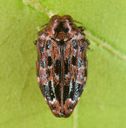
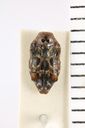
of Tracheini are generally small-bodied buprestids, typically 3–10 mm in length. Members of Habroloma often exhibit metallic coloration, while some such as Leiopleura display distinctive camouflage patterns resembling bird droppings. The tribe can be distinguished from other Agrilinae by a combination of morphological characters including antennal structure and body form, though precise identification to genus requires examination of specific characters. Larvae create characteristic full-depth linear-blotch mines in leaves, with occurring within the mine.
Images
Habitat
Tracheini inhabit environments supporting their plants, ranging from primary evergreen forests to more open . Japanese occur in forests dominated by Castanopsis sieboldii and in epiphytic situations. South American species occupy diverse vegetation types where suitable host plants grow. The tribe shows ecological flexibility, with some species associated with forest trees and others with understory shrubs or epiphytes.
Distribution
The tribe has a wide distribution across multiple continents. In the Japanese Archipelago, 32 have been recorded (12 Habroloma, 20 Trachys). South American representatives include Leiopleura venustula. The tribe occurs in North America, Europe, Asia, and South America, with highest documented in eastern Asia.
Diet
Larvae feed as leaf miners, consuming mesophyll tissue of mature leaves in full-depth linear-blotch mines. feed on plant leaves, though specific feeding details are poorly documented for most .
Life Cycle
Larvae develop as leaf miners, creating full-depth linear-blotch mines in mature leaves and pupating within the mine. emerge from pupae reared from leaf mines. In Habroloma associated with Symplocos, young larvae bore into midribs and petioles, causing leaf fall, then continue mining in fallen leaves.
Behavior
Some exhibit notable defensive adaptations. Leiopleura venustula employs bird-dropping masquerade: its coloration resembles older dry bird droppings, and it secretes highly convoluted wax filaments from pores that mimic the white found in bird . of most species are found on plant foliage and are capable of rapid movement typical of buprestids.
Ecological Role
Tracheini function as herbivores of mature leaves on woody and subwoody plants. Their leaf-mining habit creates distinctive damage patterns on foliage. The unique mining strategy of some Habroloma , which cause premature leaf abscission, may influence host plant and nutrient cycling in forest .
Human Relevance
Some are minor pests of cultivated plants, including fruit trees (Malus, Prunus) and ornamental shrubs (Rosa). The distinctive leaf mines can serve as indicators of presence for monitoring purposes. The tribe has received recent taxonomic attention with descriptions of new species from Japan.
Similar Taxa
More Details
Taxonomic composition
The tribe primarily comprises two : Habroloma (approximately 12 in Japan, with additional species globally) and Trachys (approximately 20 species in Japan). The genus Leiopleura in South America also belongs to this tribe.
Nomenclatural history
Recent taxonomic work on Japanese Tracheini required a corrigendum to properly designate depositories (National Museum of Nature and Science, Tokyo), illustrating the importance of strict adherence to ICZN Article 16.4.2 for availability of new names.
Host plant diversity
Japanese Tracheini are associated with at least 20 plant across multiple including Elaeocarpaceae, Loranthaceae, Symplocaceae, Rosaceae, Ulmaceae, Fagaceae, and Fabaceae. Habroloma taxillusi represents the first recorded association of Tracheini with epiphytic plants (Loranthaceae).
Sources and further reading
- BugGuide
- iNaturalist taxon
- Buprestidae | Beetles In The Bush | Page 6
- “Playing poop”: an interesting case of bird dropping masquerade in leafmining Buprestidae (Agrilinae, Tracheini)
- Diversity and larval leaf-mining habits of Japanese jewel beetles of the tribe Tracheini (Coleoptera, Buprestidae)
- Erratum: Corrigendum: Kato M, Kawakita A (2023) Diversity and larval leaf-mining habits of Japanese jewel beetles of the tribe Tracheini (Coleoptera, Buprestidae). ZooKeys 1156: 133-158. doi: 10.3897/zookeys.1156.97768.