
Xyletinus
Latreille, 1809
Species Guides
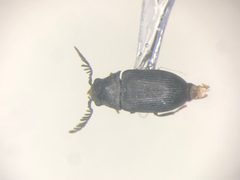
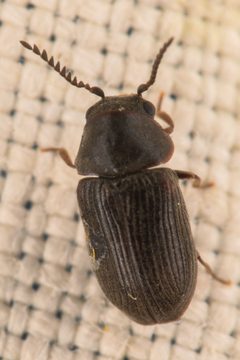
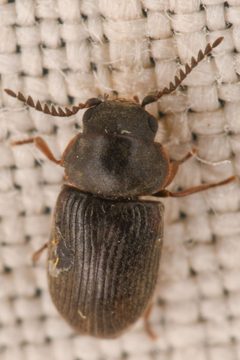
5Xyletinus is a of death-watch and spider beetles in the Ptinidae, Xyletininae. are wood-associated beetles with larvae that develop within dead or seasoned wood. The genus includes at least 51 species distributed across northern regions including Scandinavia and North America. Well-studied species such as X. peltatus demonstrate strong preferences for particular wood species during oviposition.
Pronunciation
How to pronounce Xyletinus: //zaɪlɛˈtaɪnəs//
These audio files are automatically generated. While they are not always 100% accurate, they are a good starting point.
Images
Habitat
Associated with dead or seasoned wood of various tree . Xyletinus peltatus has been observed in crawl spaces beneath houses and in controlled laboratory settings with wood substrates.
Distribution
Recorded from Denmark, Norway, Sweden, Finland, and North America. Xyletinus tremulicola is known from Sweden and Finland.
Diet
Larvae are , feeding on wood tissue. Xyletinus peltatus larvae develop on various wood including Liriodendron tulipifera (yellow-poplar/tulip poplar), Pinus elliottii, Pinus echinata, Liquidambar (sweetgum), and Pseudotsuga menziesii (Douglas fir).
Host Associations
- Liriodendron tulipifera - oviposition and larval developmentPreferred ; optimal survival and growth
- Pinus elliottii - oviposition and larval developmentFavorable for survival and growth
- Pinus echinata - larval developmentLarvae survive and grow well despite lower oviposition preference
- Liquidambar - oviposition deposited but larvae tunnel without appreciable growth
- Pseudotsuga menziesii - oviposition deposited on plywood but larvae do not survive
Life Cycle
In Xyletinus peltatus, the requires at least 2 years in favorable woods and may extend to 3–5 years in less suitable wood . hatch rates exceed 85% on most tested wood species.
Behavior
Females show significant preference for yellow-poplar (Liriodendron tulipifera) over other woods for oviposition. -laying occurs preferentially on block undersurfaces, possibly in response to reduced light conditions. Females appear to respond first to favored , then to oviposition site characteristics. Larvae initiate galleries in wood; extensive tunneling without growth occurs in unsuitable substrates.
Ecological Role
Wood decomposer contributing to breakdown of dead wood and forest detritus. Affects susceptibility of wood materials to attack based on and surface characteristics.
Human Relevance
Xyletinus peltatus has been documented as a pest in structural settings, with found in crawl spaces beneath houses. Wood selection and surface features influence susceptibility to .
Similar Taxa
- Other Ptinidae/Anobiidae generaXyletinus can be distinguished by combination of morphological characters detailed in taxonomic keys; specific diagnostic features for the require examination of not detailed in available sources.
Sources and further reading
- BugGuide
- Wikipedia
- GBIF taxonomy match
- iNaturalist taxon
- NCBI Taxonomy
- Catalogue of Life
- ANOBIID BEETLE, XYLETINUS PELTATUS (COLEOPTERA: ANOBIIDAE), OVIPOSITION ON VARIOUS WOODS
- <i>Xyletinus tremulicola</i> (Coleoptera, Anobiidae) found in Finland
- SURVIVAL AND GROWTH OF THE ANOBIID BEETLE XYLETINUS PELTATUS (COLEOPTERA: ANOBIIDAE) ON VARIOUS WOODS