
Mezium
Leach in Samouelle, 1819
spider beetles
Species Guides
2- Mezium affine(shiny spider beetle)
- Mezium americanum(American spider beetle)
Mezium is a of spider beetles ( Ptininae) with a global distribution concentrated in two main regions: the western Mediterranean from the Iberian Peninsula to Morocco and the Canary Islands, and central and southern Africa. in this genus are primarily cave-dwelling, feeding on animal and bat guano, though several have adapted to human-made structures such as barns and chicken coops. The genus includes notable species such as Mezium affine (shiny spider beetle) and Mezium americanum (American spider beetle).

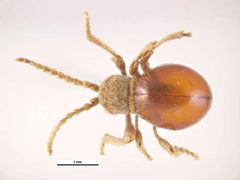
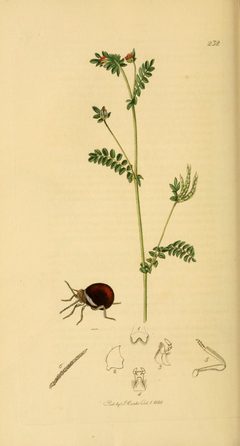
Pronunciation
How to pronounce Mezium: //ˈmɛzi.ʊm//
These audio files are automatically generated. While they are not always 100% accurate, they are a good starting point.
Identification
Members of Mezium can be distinguished from other spider beetle by their placement in tribe Meziini. -level identification requires examination of specific morphological characters; for example, Mezium affine is recognized by its shiny appearance, while Mezium americanum is known as the black spider beetle.
Images
Habitat
Primary natural is caves, where feed on animal and bat guano. have been observed in coastal areas and regions with Mediterranean climate. Several species occupy human-made structures including barns and chicken coops.
Distribution
Distributed throughout most of the world with two centers of concentration: (1) an area extending from the Iberian Peninsula to Morocco, including the Canary Islands, and (2) an area extending through central and southern Africa. Several recently described are African endemics. Distribution records from GBIF indicate presence in Norway (NO) and Sweden (SE).
Diet
Feeds on animal , especially bat guano in cave . Diet in human-associated habitats has been observed but not specifically documented.
Host Associations
- bat - guano sourcebat guano serves as primary food source in cave
Behavior
Adaptable to human-made structures; have been documented in barns and chicken coops.
Ecological Role
Contributes to decomposition of animal and guano in cave .
Human Relevance
Some have adapted to human-made structures including barns and chicken coops, potentially serving as stored product pests or nuisance insects in these settings.
Similar Taxa
- other Ptininae generaMezium belongs to tribe Meziini, distinguishing it from other spider beetle in the same
More Details
Taxonomic authorship note
Sources conflict on authorship: Catalogue of Life lists Leach in Samouelle, 1819, while GBIF lists Curtis, 1828. The accepted authorship requires further verification.
Species diversity
The includes at least 13 described , with several recently described African endemics indicating active taxonomic work in the region.