
Priobium
Motschulsky, 1845
death-watch beetles
Species Guides
3- Priobium carpini(death-watch beetle)
- Priobium punctatum
- Priobium sericeum(silky anobiid)
Priobium is a of wood-boring beetles in the Ptinidae (formerly Anobiidae), commonly referred to as death-watch beetles. The genus occurs in western North America and Europe, with that bore into coniferous wood. lack the distinctly clubbed seen in some related genera. Larval development occurs within dead or dying conifer wood.
Pronunciation
How to pronounce Priobium: /ˈpraɪoʊbiəm/
These audio files are automatically generated. While they are not always 100% accurate, they are a good starting point.
Identification
Distinguished from other Ptinidae by the non-clubbed and pronotum shape similar to Hadrobregmus. The various appear externally similar, making species-level identification difficult based on alone. Separation from Hadrobregmus requires careful examination of pronotal and antennal characters.
Images
Appearance
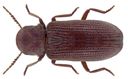
are small wood-boring beetles with that lack a distinct club. The pronotum resembles that of Hadrobregmus, with a characteristic shape that helps distinguish the . within Priobium appear similar to one another, showing limited external morphological differentiation.
Habitat
Associated with coniferous wood, including dead or dying trees and processed timber. Larvae develop within the wood substrate.
Distribution
Western North America; also recorded from Europe (Denmark, Norway, Sweden).
Diet
Larvae consume coniferous wood. feeding habits are not documented.
Host Associations
- conifers - larval food sourceLarvae bore into and consume conifer wood
Life Cycle
Larval development occurs within conifer wood. Specific details on laying, , and time are not documented.
Behavior
Wood-boring habit; larvae tunnel through conifer wood. are likely associated with the same woody substrate.
Ecological Role
Decomposer of dead conifer wood, contributing to nutrient cycling in forest .
Human Relevance
Potential pest of stored or structural conifer timber, though specific economic impact is not documented. The "death-watch beetle" refers to the tapping sound produced by some related , though this is not confirmed for Priobium.
Similar Taxa
- HadrobregmusShares similar pronotum shape; distinguished by antennal and other subtle morphological characters
- other Anobiinae generaSimilar wood-boring habit; distinguished by non-clubbed and pronotal
More Details
Taxonomic placement
Priobium has been placed in both Anobiidae and Ptinidae depending on classification system used; current sources list Ptinidae.
Species diversity
At least five are recognized: P. carpini, P. dendrobiiforme, P. mexicanum, P. punctatum, and P. sericeum.