
Attagenus pellio
(Linnaeus, 1758)
fur beetle, carpet beetle, two-spotted carpet-beetle
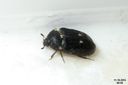
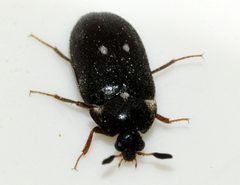
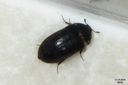
Attagenus pellio is a small in the Dermestidae, commonly known as the fur beetle or carpet beetle. It is a significant pest of stored products, damaging furs, skins, textiles, and grain. The is distinguished by two distinct patches of white hair on its . Larvae are honey-colored, approximately 6 mm long, and covered in dense setae. are frequently laid in bird nests, particularly those of sparrows, facilitating entry into human dwellings.
Pronunciation
How to pronounce Attagenus pellio: /ætəˈdʒiːnəs ˈpɛlioʊ/
These audio files are automatically generated. While they are not always 100% accurate, they are a good starting point.
Identification
Distinguished from other carpet beetles by the two discrete white hair patches on the (Anthrenus typically show banded or spotted patterns, not paired patches). Larger and more oval than Anthrenus species (3–5 mm vs. 2–4 mm). More uniformly dark than Trogoderma species, which often show patterned coloration. Larvae tapered to with a terminal tuft of long hairs, differing from the more uniformly hairy, rounded larvae of Anthrenus.
Images
Habitat
Indoor environments, particularly where organic debris accumulates: floorboard cracks, spaces beneath furniture, and storage areas with wool or textiles. Outdoors, associated with bird nests (especially sparrow nests under eaves) and rodent nests, which serve as breeding sites and food sources.
Distribution
Recorded from North America and Europe (including Belgium). Distribution likely due to human commerce, though precise native range unclear.
Diet
Larvae feed on dried animal products: furs, skins, wool, silk, feathers, and accumulated hair and skin . Also known to consume grain and dried plant material. feed on flower pollen.
Life Cycle
laid in bird nests (particularly sparrows) and rodent nests. Larvae develop within these nests or in indoor environments where organic debris has accumulated. Larval stage is the destructive feeding phase. occurs within the substrate or in concealed locations. emerge, disperse, and feed on pollen before seeking mates.
Behavior
Larvae inhabit cracks and crevices where organic matter collects. are attracted to flowers for pollen feeding. The exploits human structures by utilizing bird nests under eaves as entry points, then establishing indoors.
Ecological Role
Scavenger and decomposer of animal-derived organic matter; contributes to nutrient cycling in natural settings. In human environments, functions as a pest of stored products. serve as when feeding on flowers.
Human Relevance
Significant economic pest of stored products, causing damage to furs, textiles, carpets, and grain. originate from outdoor bird or rodent nests. Control requires thorough cleaning, removal of infested materials, and elimination of outdoor nest sources. Larval hairs can cause dermatitis or respiratory irritation in sensitive individuals.
Similar Taxa
- Attagenus unicolorAlso called black carpet beetle; lacks white elytral patches, appearing uniformly dark
- Anthrenus verbasciVaried carpet beetle; smaller (2–3 mm), with variegated pattern of white, brown, and black scales rather than discrete white patches
- Trogoderma variabileWarehouse beetle; more elongated body, often with patterned , and associated more with grain storage than textiles