
Megatoma
Herbst, 1791
Species Guides
4- Megatoma ampla(carpet beetle)
- Megatoma perversa
- Megatoma pubescens(Pubescent Carpet Beetle)
- Megatoma variegata(carpet beetle)
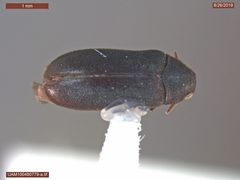
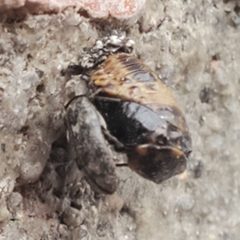
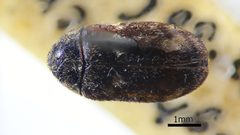
Megatoma is a of dermestid beetles ( Dermestidae) distributed across the Palearctic, Near East, and Nearctic regions. The genus contains approximately 23 described , including the well-studied Megatoma undata (Linnaeus, 1758). Species within this genus are associated with stored products and natural where they feed on dried organic matter. Larval stages have been documented in detail for some species, showing characteristic dermestid with specialized setae.
Pronunciation
How to pronounce Megatoma: //ˌmɛɡəˈtoʊmə//
These audio files are automatically generated. While they are not always 100% accurate, they are a good starting point.
Images
Distribution
Native to the Palearctic (including Europe), the Near East, and the Nearctic. Specific distribution records include Denmark (DK), Norway (NO), and Sweden (SE).
Life Cycle
Development proceeds through , larval, pupal, and stages. Larvae of Megatoma undata possess hastisetae (characteristic spear-tipped setae) and exhibit distinct morphological features including specialized , , , , and labial palps. Pupae show defined tergal structures with antecostal . Acid phosphatase activity peaks during the pupal stage, indicating active metabolic processes during .
Behavior
of Megatoma (as documented for Attagenus megatoma) exhibit negative immediately after , becoming photopositive later in adult life after the main oviposition period. This behavioral shift correlates with structural changes in the .
Human Relevance
Some have economic importance as pests of stored products. Megatoma undata has documented economic significance. The has been studied for its role as a for gregarine (Pyxinia frenzeli), contributing to understanding of parasite-host relationships in stored product insects.
Similar Taxa
- AttagenusFormerly included some Megatoma (e.g., Attagenus megatoma now Megatoma); separation based on morphological and molecular characters placing species in Megatoma
- TrogodermaBoth are dermestid with similar larval and stored product associations; Megatoma distinguished by specific antennal and setal characteristics
Sources and further reading
- BugGuide
- Wikipedia
- GBIF taxonomy match
- iNaturalist taxon
- NCBI Taxonomy
- Catalogue of Life
- Biology of the gregarine Pyxinia frenzeli in the black carpet beetle, Attagenus megatoma
- Acid Phosphatase During Development of the Black Carpet Beetle Attagenus megatoma (Fab.)
- Figures 1-3 from: Kadej M (2017) Larva and pupa of Megatoma (s. str.) undata (Linnaeus, 1758) with remarks on biology and economic importance (Coleoptera, Dermestidae). ZooKeys 698: 59-74. https://doi.org/10.3897/zookeys.698.14049
- Figures 4-6 from: Kadej M (2017) Larva and pupa of Megatoma (s. str.) undata (Linnaeus, 1758) with remarks on biology and economic importance (Coleoptera, Dermestidae). ZooKeys 698: 59-74. https://doi.org/10.3897/zookeys.698.14049
- Larva and pupa of Megatoma (s. str.) undata (Linnaeus, 1758) with remarks on biology and economic importance (Coleoptera, Dermestidae)
- Figures 7-16 from: Kadej M (2017) Larva and pupa of Megatoma (s. str.) undata (Linnaeus, 1758) with remarks on biology and economic importance (Coleoptera, Dermestidae). ZooKeys 698: 59-74. https://doi.org/10.3897/zookeys.698.14049
- Post emergence maturation of the eye of the adult black carpet beetle, Attagenus megatoma (Fab.): An electron microscope study
- Figures 17-21 from: Kadej M (2017) Larva and pupa of Megatoma (s. str.) undata (Linnaeus, 1758) with remarks on biology and economic importance (Coleoptera, Dermestidae). ZooKeys 698: 59-74. https://doi.org/10.3897/zookeys.698.14049