
Xylobiops
Casey, 1898
horned powder-post beetles, red-shouldered bostrichid (X. basilaris)
Species Guides
4- Xylobiops basilaris(Red-shouldered Bostrichid)
- Xylobiops parilis
- Xylobiops sextuberculatus(horned powder-post beetle)
- Xylobiops texanus(Texas Brown-shouldered Bostrichid)
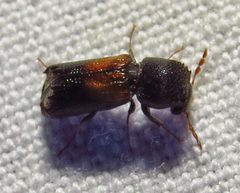
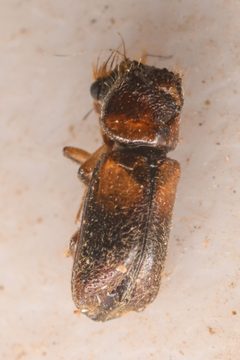
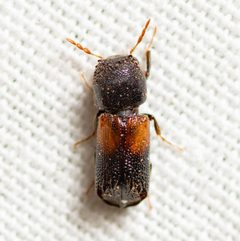
Xylobiops is a of beetles in the Bostrichidae, commonly known as horned powder-post beetles. The genus was established by Casey in 1898 and contains approximately six described distributed primarily in North America. These beetles are wood-boring insects associated with dead or dying hardwoods. The most frequently encountered species is Xylobiops basilaris, commonly called the red-shouldered bostrichid.
Pronunciation
How to pronounce Xylobiops: //zaɪloʊˈbaɪ.ɒps//
These audio files are automatically generated. While they are not always 100% accurate, they are a good starting point.
Identification
Distinguished from other bostrichid by the combination of horn-like projections on the and the hood-shaped pronotum. X. basilaris can be recognized by its red-shouldered color pattern. Separation from the related genus Xylopertha requires examination of antennal structure and precise pronotal shape. -level identification often relies on male genitalia and detailed examination of patterns on the .
Images
Habitat
Associated with dead, dying, or recently cut hardwood trees and branches. Found in forested areas, woodlots, and occasionally in stored timber or lumber. Specific microhabitats include bark crevices and exposed wood surfaces of various deciduous trees.
Distribution
Primarily North American; records from United States including Vermont, with broader distribution across eastern and central regions. Individual show varying ranges: X. basilaris is widespread in eastern North America, while X. texanus occurs in the southern United States.
Seasonality
activity period varies by and latitude; X. basilaris has been observed from spring through fall in temperate regions, with peak activity during warmer months. Specific seasonal patterns for other species are less documented.
Diet
Larvae bore into and feed on the wood of hardwood trees, particularly oak and other deciduous . The precise range varies among species and has not been fully documented for all members of the .
Life Cycle
Complete with , larval, pupal, and stages. Larvae are wood-borers that tunnel through sapwood and heartwood of trees. Developmental timing varies with wood moisture content and temperature. Adults emerge through exit holes and may be found on wood surfaces.
Behavior
are cryptic, often remaining motionless on bark or wood surfaces. When disturbed, they may feign death. Males use cephalic horns in combat with other males. Both sexes are attracted to stressed or recently dead wood for oviposition.
Ecological Role
Decomposers that contribute to breakdown of dead hardwood . Their tunneling activity accelerates wood decay and creates for other organisms. May serve as prey for woodpeckers and other .
Human Relevance
Occasional pests of seasoned hardwood lumber and wooden structures, though generally less damaging than some other powder-post beetles. X. basilaris has been reported from stored wood products. Presence in structural timbers is usually indicative of pre-existing wood degradation rather than primary of sound wood.
Similar Taxa
- XyloperthaSimilar hood-like pronotum and wood-boring habit; distinguished by antennal club structure and details of pronotal margin
- DinoderusRelated bostrichid with overlapping size range; lacks prominent cephalic horns and has different antennal
- BostrichusAnother bostrichine ; differs in body proportions and tuberculation patterns
More Details
Taxonomic history
The was established by Casey in 1898. boundaries and relationships within the genus have been subject to revision, with some authors recognizing fewer or more species based on morphological interpretation.
Observation frequency
The has over 3,000 observations on iNaturalist, suggesting it is relatively well-documented by naturalists, though precise identification to level in field observations remains challenging.