
Scobicia declivis
(LeConte, 1860)
lead cable borer, short-circuit beetle, leadcable borer
is a horned powder-post beetle in the Bostrichidae, commonly known as the lead cable borer or short-circuit . The is notable for its ability to bore through lead sheathing on telecommunications cables, causing electrical shorts by allowing moisture to reach wires. It has been documented in North America and Oceania. The beetle is classified among insects that tolerate or thrive on toxic materials.
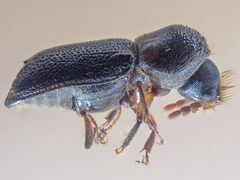
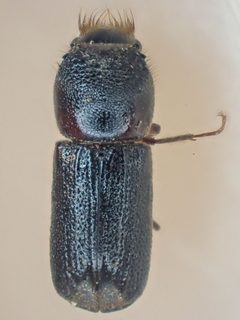
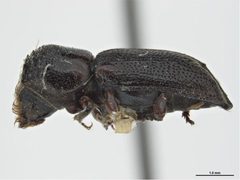
Pronunciation
How to pronounce Scobicia declivis: /skoʊˈbɪsiə dɪˈkluːvɪs/
These audio files are automatically generated. While they are not always 100% accurate, they are a good starting point.
Images
Distribution
North America and Oceania
Host Associations
- lead-sheathed telecommunications aerial telephone cables - bores through lead sheathing to access interiorDrilling allows moisture to reach wires, causing short circuits that can ruin cable segments 15-20 feet in length
Behavior
bore through lead sheathing of aerial telephone cables. The results in moisture penetration to wires, causing electrical shorts.
Human Relevance
Pest of telecommunications infrastructure. Damage to lead-sheathed cables causes short circuits and service disruption. The is noted among insects that tolerate toxic heavy metals.
Similar Taxa
- Melanophila (fire beetles)Both are beetles associated with extreme conditions; however, fire beetles are attracted to heat and smoke from forest fires for , while is attracted to lead cable infrastructure
- drugstore beetles (Stegobium paniceum)Both are noted as insects that tolerate toxic materials; drugstore beetles feed on dried plant products including toxic substances like strychnine, while tolerates lead
More Details
Toxic material tolerance
is documented among insects that tolerate or thrive on toxic materials, specifically heavy metals. This distinguishes it from most wood-boring beetles.
Common name origin
The 'short-circuit ' and 'lead cable borer' directly reference the economic damage caused by its boring in telecommunications cables.