
Dinapate wrightii
Horn, 1886
Giant Palm Borer
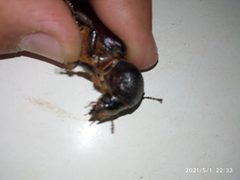
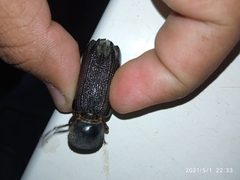
Dinapate wrightii, the Giant Palm Borer, is the largest in the Bostrichidae, reaching approximately 5 cm in length. are non-feeding and live about two weeks. The species is native to extreme southern California and Baja California Sur, Mexico, with most records from the Coachella Valley. It is a pest of fan palms, particularly Washingtonia species.
Pronunciation
How to pronounce Dinapate wrightii: //ˌdaɪnəˈpeɪti ˈraɪtaɪ.aɪ//
These audio files are automatically generated. While they are not always 100% accurate, they are a good starting point.
Identification
The largest bostrichid , approximately 5 cm (2 inches) in length. are robust and cylindrical, typical of the Bostrichidae. Larvae are wood-boring that tunnel extensively through palm crowns and trunks.
Images
Habitat
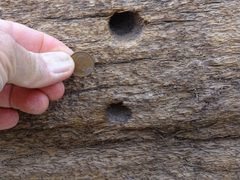
Associated with fan palms, especially in desert oasis environments. and larvae occupy tunnels within palm crowns, with tunnels extending up to ten inches deep into the wood.
Distribution
Native to extreme southern California (primarily the Coachella Valley) and Baja California Sur, Mexico. The Mexican record from Baja California Sur extends the known range from an earlier specimen collected 500 km forward of Baja California nearly 80 years prior.
Diet
do not feed. Larvae feed on palm wood, tunneling through crowns and trunks of palms for one to several years.
Host Associations
- Washingtonia filifera - desert fan palm
- Washingtonia robusta - Mexican fan palm
Life Cycle
are deposited in tunnels excavated by females. Larvae hatch within several days and feed for one to several years before maturing. occurs within the palm. emerge, mate in tunnels, and live approximately two weeks without feeding.
Behavior
Females locate fan palms and tunnel into crowns; males follow females into tunnels where mating occurs. Females excavate tunnels up to ten inches deep for oviposition. Larvae tunnel continuously while feeding.
Ecological Role
Serious pest of native desert palms. Larval tunneling damages palm crowns and can compromise structural integrity of trees.
Human Relevance
Considered a pest of ornamental and native fan palms, particularly Washingtonia used in landscaping. Economic impact on palm and maintenance in its native range.
Similar Taxa
- Other BostrichidaeDistinguished by exceptional size (largest in ), specific association with fan palms, and geographic restriction to southwestern North America.
Sources and further reading
- BugGuide
- Wikipedia
- GBIF taxonomy match
- iNaturalist taxon
- NCBI Taxonomy
- Catalogue of Life
- Grasshoppers of Colorado
- Grasshoppers of Colorado
- Ripiphoridae | Beetles In The Bush
- Bug Eric: December 2010
- Bug Eric: Moth Monday: Hubbard's Silkmoth
- One island. One beetle. One-of-a-kind. - Buglife Blog - Buglife
- Ampliación de la distribución de Dinapate wrightii Horn (Coleoptera: Bostrichidae) en Baja Californi Sur, México