
Gyrinus plicifer
LeConte, 1852
whirligig beetle
Pronunciation
How to pronounce Gyrinus plicifer: //d͡ʒɪˈraɪnəs ˈplɪsɪfər//
These audio files are automatically generated. While they are not always 100% accurate, they are a good starting point.
Identification
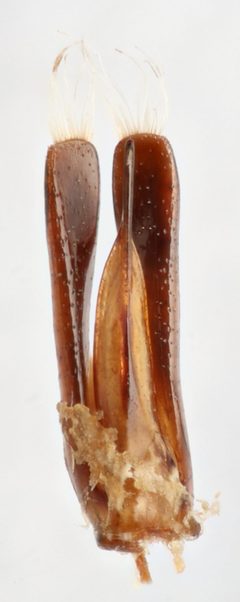
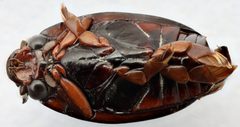
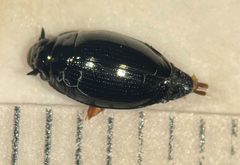
Gyrinus plicifer belongs to the Gyrinus, one of two genera of whirligig beetles occurring in Missouri (the other being Dineutus). Members of Gyrinus are generally smaller than Dineutus and possess a visible scutellum, whereas Dineutus species have a hidden scutellum. Specific identification of G. plicifer requires examination of characters; the species is distinguished from by features of the male genitalia and other subtle morphological traits.
Images
Distribution
North America, with confirmed records from British Columbia, Canada. The broader North American range requires additional documentation.
Behavior
Like other whirligig beetles, G. plicifer likely forms surface ('rafts') on calm water. These aggregations serve multiple functions: increased detection through collective vigilance, and possibly aposematic signaling through chemical defenses from the pygidial glands.
Similar Taxa
- Dineutus spp.Large whirligig beetles (~12 mm) with hidden scutellum and rounded elytral apices, distinguished from Gyrinus by size and scutellum visibility.
- Gyrinus spp.Congeneric requiring examination of male genitalia and characters for definitive identification; field separation often not possible.