
Gyrinus analis
Say, 1825
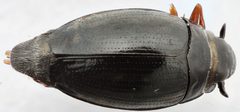
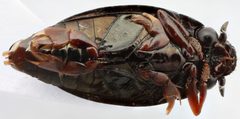
Gyrinus analis is a of whirligig beetle in the Gyrinidae, found in North America. Like other gyrinids, it lives almost exclusively on the water surface, where it forms dense called 'rafts.' These aggregations serve multiple functions including detection and chemical defense. The species is smaller than some and has been observed forming particularly tight, cohesive rafts.
Pronunciation
How to pronounce Gyrinus analis: /d͡ʒɪˈraɪnəs əˈnælɪs/
These audio files are automatically generated. While they are not always 100% accurate, they are a good starting point.
Identification
Gyrinus analis is smaller than Dineutus and forms notably dense, tight where individual beetles are packed so closely that water is not visible between them. It lacks the pale orange venter of Dineutus discolor. When disturbed, Gyrinus analis aggregates scatter rapidly and later re-form in single-file synchronized wavy lines of dozens to hundreds of individuals.
Images
Habitat
Clear, slow-moving freshwater systems including rivers and streams with gravel bottoms. Found in sheltered pools near shorelines.
Distribution
North America. Documented from the Sulphur River near Texarkana (Arkansas/Texas border region) and presumably occurs more broadly across the continent.
Seasonality
Observed aggregating during fall months.
Behavior
Forms dense surface ('rafts') that can exceed one meter in width, with beetles packed tightly enough to resemble oil slicks from a distance. Aggregates scatter rapidly when disturbed, then re-form through synchronized single-file wavy lines. Raft formation provides collective detection through increased visual scanning and may serve as an aposematic signal via pygidial gland secretions.
Similar Taxa
- Dineutus discolorLarger size, pale orange venter, looser , and sweet-smelling pygidial secretions ('apple ') compared to the pungent odor of Gyrinus.
- Dineutus ciliatusDarker red venter and larger size; distinguished from G. analis by coloration and structure.
- Gyrinus woodruffiPrefers thick emergent vegetation rather than open water ; detected by smell of pygidial fluid rather than visual observation of rafts.