
Gyretes
Brullé, 1835
Species Guides
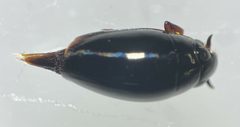
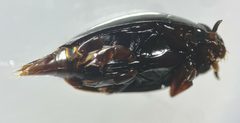
3Gyretes is a of whirligig beetles ( Gyrinidae) containing approximately 181 , primarily distributed in the Neotropics. are aquatic surface-dwelling beetles found in freshwater . The genus is characterized by specific morphological features of the reproductive tracts and stages that distinguish it from other gyrinid genera. Larval stages have been described for several species, with distinctive chaetotaxy patterns.
Pronunciation
How to pronounce Gyretes: //ˈdʒaɪrəˌtiːz//
These audio files are automatically generated. While they are not always 100% accurate, they are a good starting point.
Identification
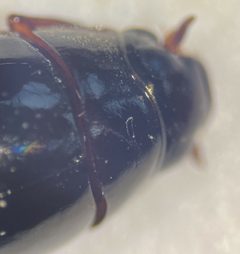
of Gyretes can be distinguished from other North American gyrinid (Dineutus, Gyrinus) by morphological features of the genitalia and body form. Larvae are distinguished from other Neotropical Gyrinidae by: short frontoclypeal seta FR3, three conspicuous additional setae on the lateral region of the parietal contiguous to stemmata, and smooth margin of with apex not indented. The hidden scutellum and body proportions differ from Dineutus.
Images
Habitat
Freshwater aquatic environments including rivers, streams, and ponds. inhabit the water surface. In the Ozark region, found in clear, cold rivers with gravelled bottoms sustained by seeps and springs.
Distribution
Primarily Neotropical, with highest diversity in Brazil (181 , predominantly in the North Region). Recorded from Maranhão state in northeastern Brazil, and from Colombia (Amazonas, Arauca, Casanare, Chocó, La Guajira, Guaviare, Meta, Risaralda, Santander, Valle del Cauca). In North America, recorded from Missouri and Arkansas in the United States, where it is considered common but undercollected.
Life Cycle
and larval stages described for some . Eggs possess a micropylar region at the pole, a longitudinal fissure, and lack an aeropyle; chorionic structure and reticulation are species-specific. First two larval instars have been described. Rearing under laboratory conditions is challenging due to low larval survival rates.
Similar Taxa
- DineutusBoth occur in North America and share aquatic surface-dwelling habits. Dineutus are generally larger (~12 mm), have rounded elytral apices, and some species have distinct vittae (longitudinal stripes). Gyretes lacks these vittae and has different body proportions.
- GyrinusBoth are small gyrinid beetles forming surface . Gyrinus are typically smaller, more circular in body outline, and have different aggregation patterns. Gyretes has been observed forming mixed-species aggregations with Gyrinus and Dineutus, though single-species aggregations are more common.
More Details
Aggregation behavior
Gyretes has been observed forming mixed- ('rafts') with other gyrinid , though most aggregates appear to be single-species. The function of these aggregations likely includes detection and chemical defense signaling, as documented in other gyrinids.
Reproductive morphology
Male Gyretes possess with a single coiled follicle, a trait shared with other Gyrinidae and Adephaga. The spermatostyle, a structure for sperm , is formed from glycoprotein secretions of the vas deferens epithelium. Females have numerous per ovary, a coiled duct, and store spermatozoa as unaggregated .
Molecular identification
The COI gene marker has been successfully used to associate stages with in Gyretes, though this marker has failed to distinguish some closely related in other gyrinid groups.
Sources and further reading
- BugGuide
- Wikipedia
- GBIF taxonomy match
- iNaturalist taxon
- NCBI Taxonomy
- “Trying” to photograph whirligig beetles | Beetles In The Bush
- Calm waters, frenzied beetles | Beetles In The Bush
- Gyretes Brullé (Coleoptera: Gyrinidae) from Brazil: Morphology of eggs and early instars
- Morphology of the Female and Male Reproductive Tracts and More Data on the Spermatostyle in the Brazilian Gyretes sp. (Coleoptera, Adephaga, Gyrinidae)
- First records of the whirligig beetles Gyretes minax Ochs, 1967 and G. puberulus Ochs, 1967 (Coleoptera, Gyrinidae) from Maranhão state, northeastern Brazil